


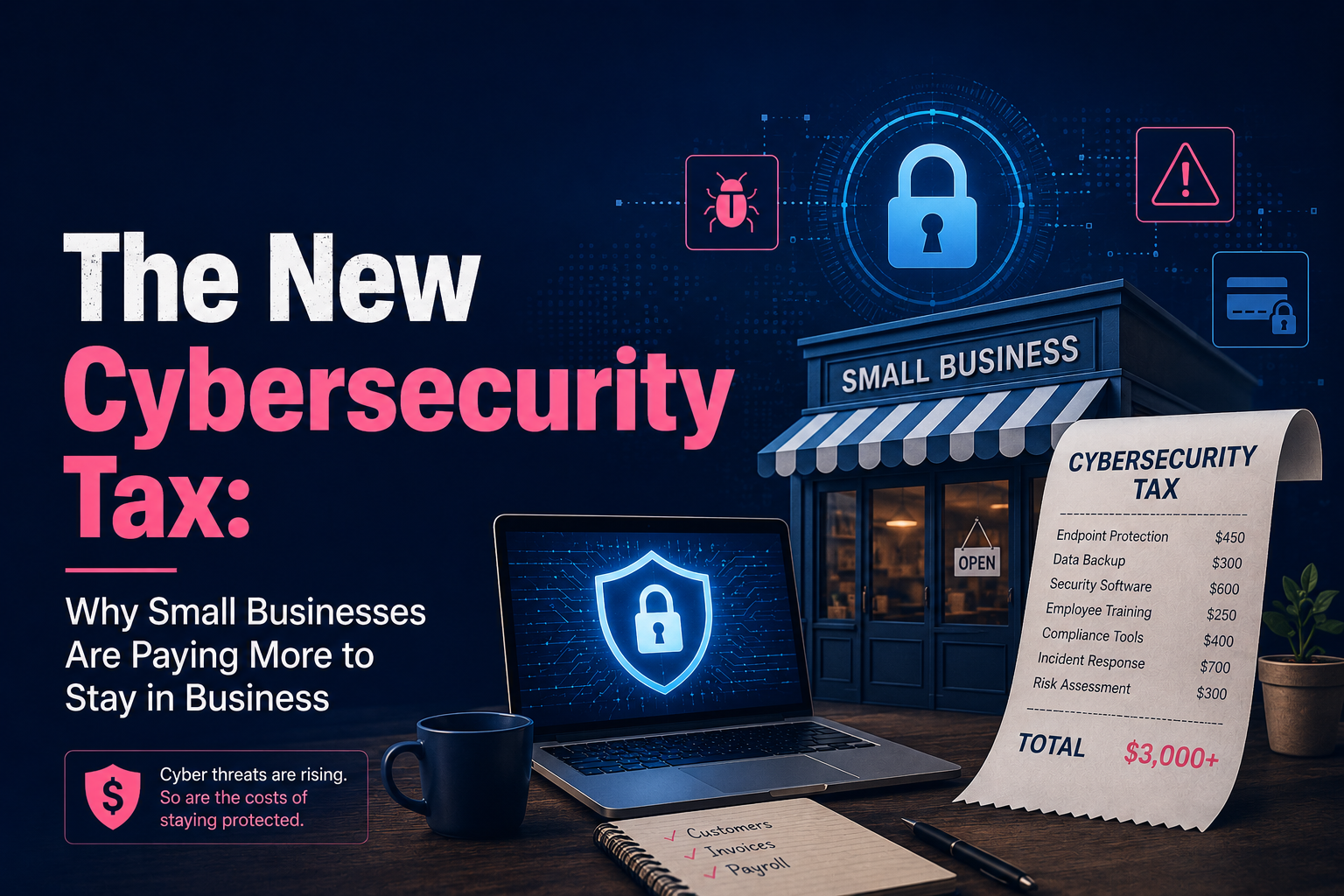
For years, cybersecurity was seen as a defensive investment—something businesses prioritised after a breach, a compliance requirement, or an IT upgrade. In 2026, that mindset no longer works. As cyberattacks become more sophisticated, supply chains grow increasingly interconnected, and data protection regulations tighten across markets, security has become a business prerequisite rather than a technical consideration.
For small and mid-sized businesses (SMEs), this has created a new kind of “tax”: the rising, unavoidable cost of staying cyber-secure enough to satisfy customers, regulators, insurers, and business partners. For brand leaders, cybersecurity is no longer just another IT expense. It has become a fundamental cost of doing business, particularly in markets like India, where regulatory expectations are rapidly catching up with the realities of an increasingly digital economy.
The shift is already visible in how businesses perceive risk. What was once considered an operational concern has quickly become a boardroom priority.
Why Cybersecurity Has Become a Business Imperative
Across global surveys in 2026, cybersecurity has overtaken inflation and recession as the leading business concern for small and medium-sized enterprises (SMEs). According to VikingCloud’s SMB Threat Landscape Report, 73% of SMBs experienced network outages, 58% suffered website downtime, and more than half faced disruptions caused by third-party vendors in the past year alone. (Source: VikingCloud)
The trend is equally concerning elsewhere. A Euro-Security study of 3,000 SMEs found that nearly one in four businesses experienced a cyberattack within a year, despite investing in security measures. Rather than being accidental victims, SMEs have become preferred targets, with attackers exploiting common weaknesses such as human error, poorly configured cloud environments, and increasingly sophisticated AI-powered phishing attacks. (Source: Euro-Security)
For brand leaders, the conversation has shifted. The question is no longer whether cybersecurity matters, but how much it costs to remain trusted enough to win, retain, and grow business.
The New Cybersecurity Tax: Contracts, Audits, and Insurance
Three interconnected forces are quietly turning cybersecurity into a mandatory cost of doing business for SMEs.
Compliance Has Become the Gateway to Revenue
In India, CERT-In’s 2026 cybersecurity rules require organisations to report cyber incidents within six hours, maintain logs for 180 days, and conduct baseline vulnerability assessments. Meeting these requirements typically costs SMEs between ₹50,000 and ₹5 lakh. (Source: IncorpX)
The Digital Personal Data Protection (DPDP) Act adds another layer of recurring compliance costs. SMEs handling hundreds of thousands of customer records are estimated to spend between ₹3 lakh and ₹8 lakh annually to remain compliant. (Source: Consently)
This is not unique to India. Regulations such as Europe’s NIS2 Directive and other strengthening data protection frameworks now require suppliers to demonstrate documented security controls and incident-response readiness before they can even qualify for vendor onboarding. Increasingly, security has become part of the sales process itself, with proof of cyber hygiene often requested before commercial discussions begin.
Security Audits are Becoming Business as Usual
Large enterprises across finance, telecom, retail, and other regulated sectors now routinely require suppliers to complete detailed cybersecurity assessments. For many SMEs, these audits expose a gap between having documented security policies and actually operating secure systems. While policies and software may be in place, the operational controls needed to support them are often missing.
The costs extend well beyond the audit itself. Businesses must also invest in consultants, remediation projects, employee training, and, in many cases, redesigning identity management or cloud infrastructure. What was once considered a sign of organisational maturity has now become the minimum requirement for participating in high-value supply chains.
Cyber Insurance is Becoming an Expectation
As cyber incidents continue to rise, many SMEs are finding cyber insurance increasingly necessary to satisfy customers, partners, and board expectations.
Global data from 2025-2026 estimates that SMEs face an average breach cost of around US$120,000. Ransomware attacks alone often involve average ransom demands of approximately US$35,000, followed by weeks of operational disruption. (Source: ainvest)
For larger organisations, requiring suppliers to carry cyber insurance has become another way to reduce business risk.
Together, compliance, security audits, and cyber insurance have created a structural cost that businesses can no longer avoid. To win contracts, SMEs must now prove they are compliant, audit-ready, and insurable—even if they still believe they are too small to attract cybercriminals.
The Indian SME Reality: Paying More, Often Too Late
For Indian SMEs and MSMEs, this cybersecurity “tax” is becoming even more significant as both cyber threats and regulatory expectations continue to intensify.
This creates a difficult balancing act. SMEs are increasingly expected to meet enterprise-grade security standards while operating with significantly smaller technology budgets, leaner teams, and limited in-house cybersecurity expertise.
Current analyses estimate that a single cyber breach can cost an Indian SME between ₹35 lakh and ₹80 lakh once business downtime, recovery costs, legal liabilities under the DPDP Act, and reputational damage are taken into account. One assessment estimates that businesses with 10-50 employees face potential losses of up to ₹75 lakh, while organisations with 200-500 employees could face cumulative exposure ranging from ₹80 lakh to ₹7 crore following a serious incident. (Source: BrainGuru)
By comparison, annual preventive investments remain relatively modest:
- ₹ 40,000- ₹ 1.2 lakh annually for a 10-employee business, covering productivity suites, endpoint protection, and annual vulnerability assessments.
- ₹2 lakh-₹4 lakh annually for a 30-person organisation, including SOC monitoring and employee awareness training.
- ₹8 lakh-₹15 lakh annually for a 100-employee business, covering managed security services and governance support.
To many business leaders, these investments may feel like another tax on growth. Yet when the financial impact of a breach can far exceed the cost of prevention, that “tax” increasingly looks like an investment in business continuity. (Source: Cyber Defence)
Why SMEs Continue to Struggle
Most SMEs recognise that cybersecurity is important. The challenge lies in translating awareness into effective execution.
Recent 2026 surveys show that 84% of business owners and 54% of cybersecurity leaders manage security internally, often without dedicated teams or specialist expertise. ESET’s Global SMB Cyber Readiness Index identifies keeping pace with evolving threats—particularly AI-enabled attacks—as one of the biggest challenges facing smaller businesses. (Source: VikingCloud)
Several underlying challenges continue to make cybersecurity more expensive—and less effective—for SMEs.
Many organisations rely on fragmented security tools purchased over time without a unified strategy, resulting in poor visibility and inconsistent protection.
Investment in employee awareness, role-based access controls, and incident-response planning often remains limited, despite human error and phishing continuing to be the leading causes of successful cyberattacks.
At the same time, persistent misconceptions—such as believing the organisation is too small to be targeted—combined with practices like using shared administrator passwords, consumer-grade software, or pirated applications continue to create avoidable vulnerabilities.
As a result, many SMEs spend money on security products and compliance checklists but fail to invest in the day-to-day operational practices that ultimately determine cyber resilience.
Turning the Cybersecurity Tax into a Strategic Investment
For brand leaders, the objective is no longer to avoid this new cybersecurity tax. Instead, the opportunity lies in turning it into a strategic investment that supports long-term growth and customer trust.
The first step is treating cybersecurity as a revenue enabler rather than a cost centre. Security investments should be linked directly to faster vendor approvals, improved contract success rates, stronger customer confidence, and reduced business disruption.
Secondly, businesses should prioritise operational fundamentals over cosmetic controls. Multi-factor authentication (MFA), regular patching, tested backups, employee awareness training, and well-rehearsed incident response plans consistently deliver greater protection than relying solely on policies or perimeter technologies.
Building long-term security partnerships also matters. Research across Europe and Africa shows that SMEs achieve stronger outcomes when they work closely with managed security providers rather than attempting to manage increasingly complex regulatory requirements alone. For Indian businesses, this often means developing ongoing relationships with MSSPs, cybersecurity auditors, and DPDP compliance specialists instead of treating them as occasional service providers.
Finally, compliance itself can become a competitive advantage. Rather than viewing CERT-In requirements or the DPDP Act as regulatory burdens, organisations can use documented security practices to strengthen RFP responses, accelerate vendor approvals, and build greater confidence with customers. In markets where many competitors still rely on informal security practices, demonstrable resilience becomes part of the brand itself.
In 2026, the new cybersecurity tax is real, and SMEs around the world—from Mumbai to Munich—are paying it. But unlike most business costs, this is one investment that directly influences customer trust, regulatory confidence, and long-term competitiveness. The organisations that view cybersecurity as business infrastructure rather than IT overhead will ultimately be the ones best positioned to grow in an increasingly digital economy.