

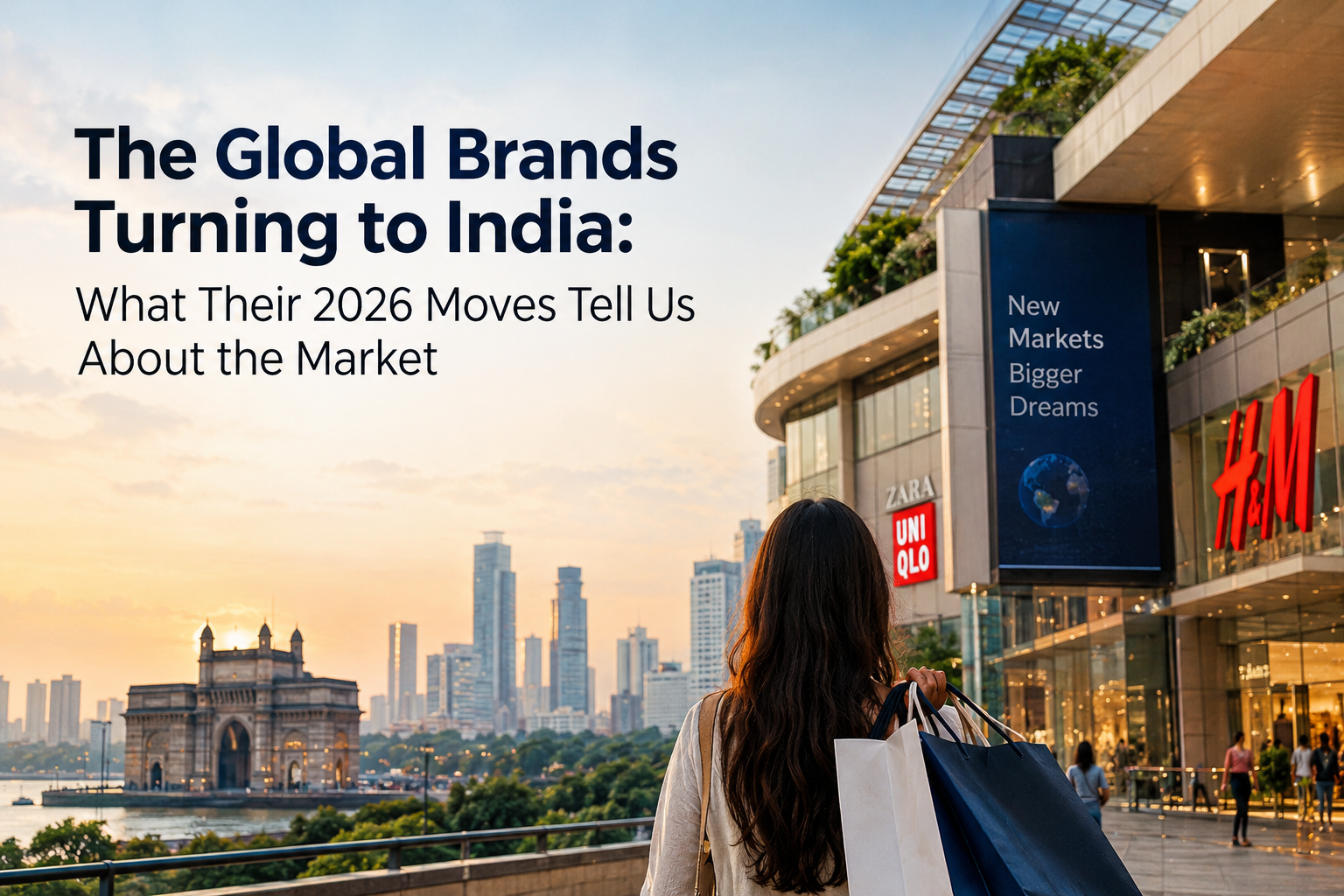
India is increasingly becoming a priority market for international businesses looking to expand their global footprint. A growing consumer base, rising demand for premium products and rapid digital adoption are creating opportunities across industries, from fashion and beauty to food, retail and technology. However, entering India is not simply about bringing an international product to a new market. It requires understanding diverse consumer preferences, navigating regulatory requirements and adapting business models to local realities.
As more global companies explore their next phase of growth in India, their expansion strategies reveal an important shift: the country is no longer just an emerging opportunity but an increasingly strategic part of global business plans.
The New Global Names Finding Their Way Into India
The international brands’ launching in India in 2026 is particularly visible across fashion and lifestyle, with global labels exploring India’s growing appetite for premium and international products. In fashion, Italian luxury streetwear brand Off-White officially entered the Indian market in April, opening its first flagship store at Mall of Asia in Bengaluru through a partnership with Brand Concepts.
Another notable entry is American activewear brand Fabletics, which made its Indian debut in September by opening its first store at DLF Promenade in New Delhi in partnership with Reliance Brands. The move brings its performance-led activewear and lifestyle collections to India’s expanding fitness and athleisure market.
American fashion company Steve Madden also introduced its accessible fashion label Madden NYC to India on August 11. The brand launched with a digital-first women’s footwear collection, available online and through select retail destinations across major Indian cities.
Why India, Why Now?
The growing interest is closely linked to changes in how Indian consumers discover, evaluate and purchase products. A larger digitally connected audience, rising disposable incomes in certain consumer segments and growing exposure to international trends have expanded the addressable market for global businesses. Consumers are increasingly exploring specialised skincare, premium beauty, athleisure and lifestyle products, creating opportunities beyond traditional mass-market categories.
The beauty industry offers a particularly interesting example. According to Amazon’s May 2026 announcement, its premium beauty segment in India recorded 50% year-on-year growth. More than half of the demand for premium beauty products was coming from Tier II and Tier III cities. This suggests that international consumption aspirations are extending beyond India’s largest metropolitan markets. (Source: press.aboutamazon)
For global brands, this changes the economics of expansion. India is not simply a large population to sell to; it is a collection of consumer segments with different spending capacities, preferences and purchase behaviours.
Digital infrastructure has further strengthened this opportunity. E-commerce marketplaces, social media discovery and digital payments allow international brands to test consumer interest and reach audiences without immediately investing in extensive physical retail networks.
The Entry Strategy Matters as Much as the Brand
For international businesses, entering India is not just about introducing a product; it is about building an operating model that can work across a diverse and highly competitive market. This is why many global companies are increasingly choosing local partnerships, franchise arrangements and established distribution networks over setting up operations entirely on their own.
The advantage goes beyond faster market access. Domestic partners understand regional demand, consumer spending patterns, retail locations and the complexities of India’s supply chain. They can also help international brands navigate local regulations, identify suitable distribution channels and build relationships with customers.
Different entry models also allow companies to manage their investments according to their business objectives. Franchising can help restaurant and retail brands expand without bearing the entire cost of operating every outlet, while e-commerce partnerships allow newer entrants to test demand before committing to a large physical presence.
For global businesses, the decision is increasingly about choosing the right local ecosystem. A strong international brand may generate initial interest, but the right operating partner can determine how efficiently that interest translates into sales, distribution, and long-term growth.
When Global Ambitions Meet Indian Realities
However, not every international brand can translate its expansion plans into an immediate launch. Starlink, Elon Musk’s satellite internet business, is one of the clearest examples. Despite securing important licences and entering partnerships with Reliance Jio and Bharti Airtel, it had not launched its commercial services in India as of October 2026.
The challenge is not necessarily a lack of consumer demand. India presents an opportunity for satellite connectivity, particularly in areas where traditional broadband infrastructure remains limited. However, Starlink’s entry depends on meeting national security conditions, lawful interception requirements, data-related obligations and spectrum regulations. Its experience highlights how regulatory readiness can determine the pace of an international company’s expansion, regardless of its global presence.
The fashion and lifestyle sector offers another example through SKIMS, the American shapewear and lifestyle brand founded by Kim Kardashian. In August 2026, the company announced its India expansion through Reliance Brands, with stores planned for Delhi and Mumbai. However, an announced partnership and proposed store locations do not automatically translate into an operational market entry. The development reflects the growing interest of international lifestyle labels in India’s premium consumer segment, while also showing that establishing a retail presence requires time and execution.
Similarly, British fast-casual restaurant chain German Doner Kebab has explored an Indian expansion through a franchise arrangement. Its proposed entry highlights the importance of identifying the right local operating partner before taking a global food concept into a new market.
These examples reveal that international expansion is rarely a straightforward process. Regulatory approvals, infrastructure requirements, local partnerships and operational planning can all influence when a brand actually reaches consumers. For global businesses, the ability to enter a market is only one part of the strategy; the ability to navigate its complexities determines how quickly expansion becomes reality.
Winning India Requires More Than Global Recognition
For international brands, the bigger challenge begins after entering the market.
Indian consumers are exposed to global brands, but they are also highly conscious of price, product suitability, and perceived value. A recognised international name may generate initial curiosity, but repeat purchases depend on whether the offering fits local expectations.
This requires thoughtful localisation, from product portfolios and pricing to marketing communication and distribution. Beauty brands may need to account for different skin concerns and climate conditions, while fashion and lifestyle labels must understand India’s varied spending capacities and regional preferences.
Competition is another important consideration. International entrants are not arriving in an empty marketplace. They are competing with established Indian companies and homegrown brands that already understand local consumers.
Business leaders, the lesson is clear: global brand equity can create an entry point, but it cannot replace local consumer understanding.
India’s growing appeal is creating opportunities for international businesses, but the winners will not necessarily be the first brands to arrive. They will be the ones who understand how India buys, what it values, and why consumers should choose them repeatedly. In 2026, entering India may be a global ambition; building a sustainable business here requires a distinctly local strategy.