

For years, media planning was largely a question of where a brand should spend: television, digital, social, search, or outdoor. That question is becoming less useful as consumers increasingly move between platforms before making a decision. The bigger challenge now is ensuring that every interaction contributes to the same customer journey.
A recent account win in Saudi Arabia offers a useful signal of where the industry is heading. D360 Bank has appointed Initiative as its media agency of record following a multi-agency pitch, with an integrated mandate built around data, performance and full-funnel growth. The move comes as the digital bank scales rapidly, having acquired more than 3.4 million customers in less than 18 months since beginning operations in 2024. (Source: Campaignme)
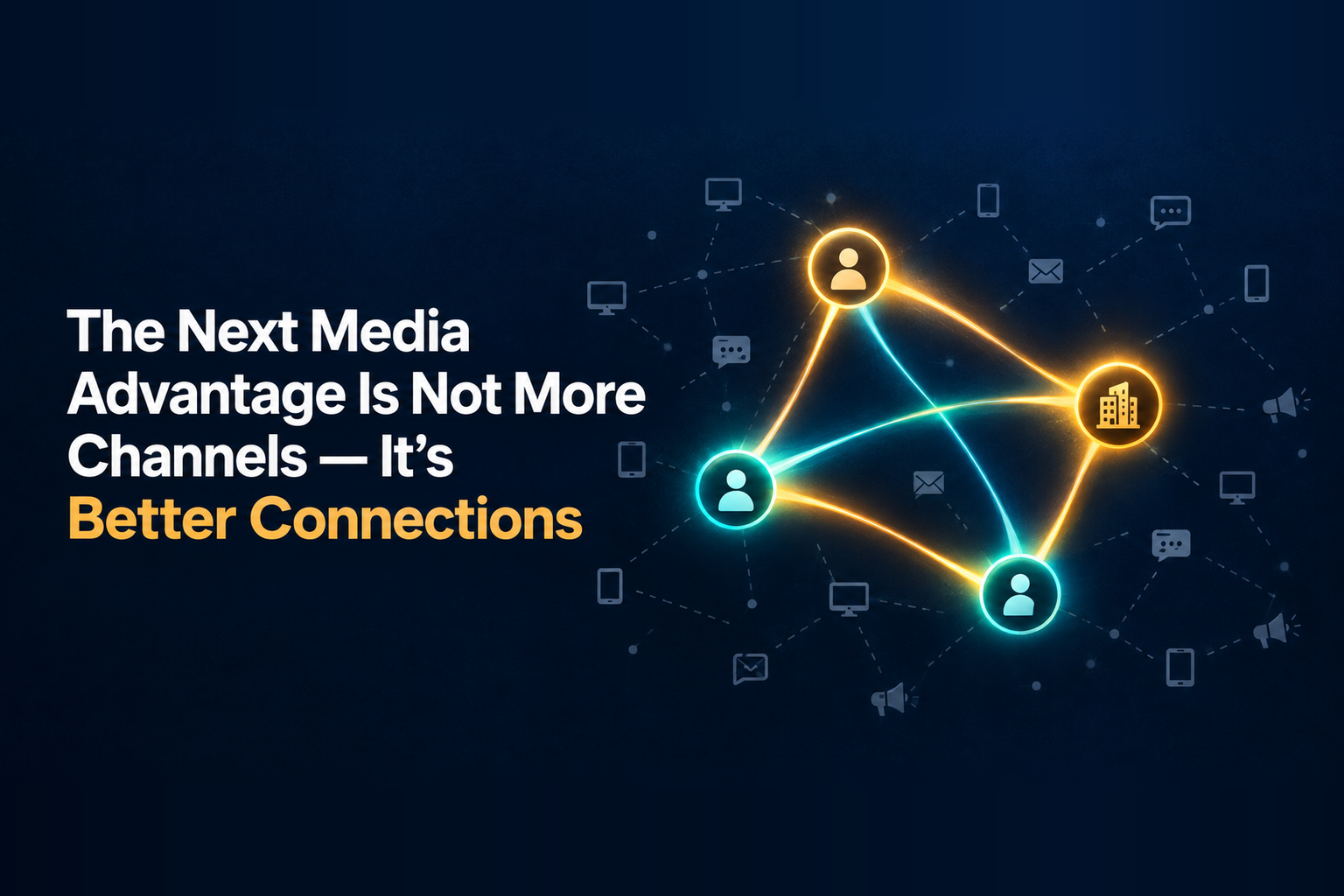
The significance is not simply that another financial brand has changed its media partner. It is that the media is increasingly being treated as an interconnected growth system rather than a collection of individual channels.
The Customer Does Not See Your Media Plan
A consumer does not think in terms of paid social, search, email, television, or retail media. They simply encounter a brand at different moments.
Someone might see a video advertisement on YouTube, search for the product on Google, encounter a creator discussing it on Instagram, visit the website, and eventually complete the purchase through an app or physical store. Each interaction can influence the next one.
That makes consistency more important than repetition. Cross-channel marketing works when different platforms perform different jobs while still moving the consumer towards a common objective. Industry guidance increasingly frames the approach around connected experiences rather than simply increasing the number of platforms a brand uses.
For brands, this changes the role of advertising. An ad is no longer successful simply because it generates an impression or a click. Its real value can depend on what happens after that interaction.
Advertising Has to Work Beyond the Impression
This is where media strategy becomes a business issue. A television campaign can create awareness. Social content can build familiarity. Search can capture intent. CRM can encourage conversion or retention. Retail and physical experiences can close the gap between consideration and purchase.
If these activities are planned independently, however, the customer may receive five different versions of the same brand with no clear progression. That can create another problem: advertising starts competing with itself.
A consumer may be shown an awareness message after already searching for the product, receive a generic promotional ad after making a purchase, or encounter inconsistent offers across platforms. The result is wasted media exposure and a fragmented brand experience.
The objective, therefore, should not be to make every channel say the same thing. It should be to make every channel know what role it is playing.
From Campaigns to Customer Journeys
The strongest cross-channel strategies treat the customer journey as the organising principle. Discovery might be driven by video or social. Consideration could move towards search, reviews, creators, or comparison content. Conversion might happen through an app, marketplace, website, or store. After purchase, email, messaging, and customer service can determine whether the relationship continues.
Examples across industries show how this can work in practice. Apple coordinates launches across digital, social, events and retail; Starbucks connects its app, loyalty programme and physical stores; Nike links its digital ecosystem with in-store experiences. These examples demonstrate that integration is not about being present everywhere, but about allowing one interaction to strengthen another. (Source: mailmode)
For marketers, that means the media brief itself needs to evolve. Instead of asking, “How much should we spend on Instagram?”, the more useful question is, “What job should Instagram perform in this customer’s journey?”
The Measurement Problem Is Changing Too
Connected marketing also exposes the limitations of measuring every channel in isolation. If a consumer sees an advertisement, searches for the brand three days later, watches a product video, and then purchases through a retailer, which interaction deserves the credit? There may not be a single correct answer.
As customer journeys become more fragmented, brands need measurement systems that can connect exposure, engagement, conversion, and retention rather than judging channels only by their last click. Cross-platform strategies increasingly depend on integrated analytics and attribution to understand how multiple touchpoints contribute to business outcomes.
This is particularly important for categories such as banking, automobiles, technology, and consumer durables, where consideration can stretch across multiple interactions before a purchase or sign-up occurs.
The Real Advantage Is Orchestration
The next phase of media competition may therefore be less about who can buy the most reach and more about who can orchestrate attention most intelligently.
D360 Bank’s new mandate reflects that direction: its partnership with Initiative places strategic thinking, data intelligence and performance measurement within an integrated media approach, with trust and sustained growth positioned alongside acquisition.
For brands, the lesson is straightforward. Being present across platforms is no longer enough. The advantage comes from understanding what each touchpoint contributes, connecting those interactions, and making the advertising experience feel like one continuous conversation.
In a fragmented media environment, the brands that connect the dots will have a better chance of turning attention into action — and action into lasting growth.