

For years, digital visibility meant appearing on the first page of Google. AI is beginning to change what that visibility looks like.
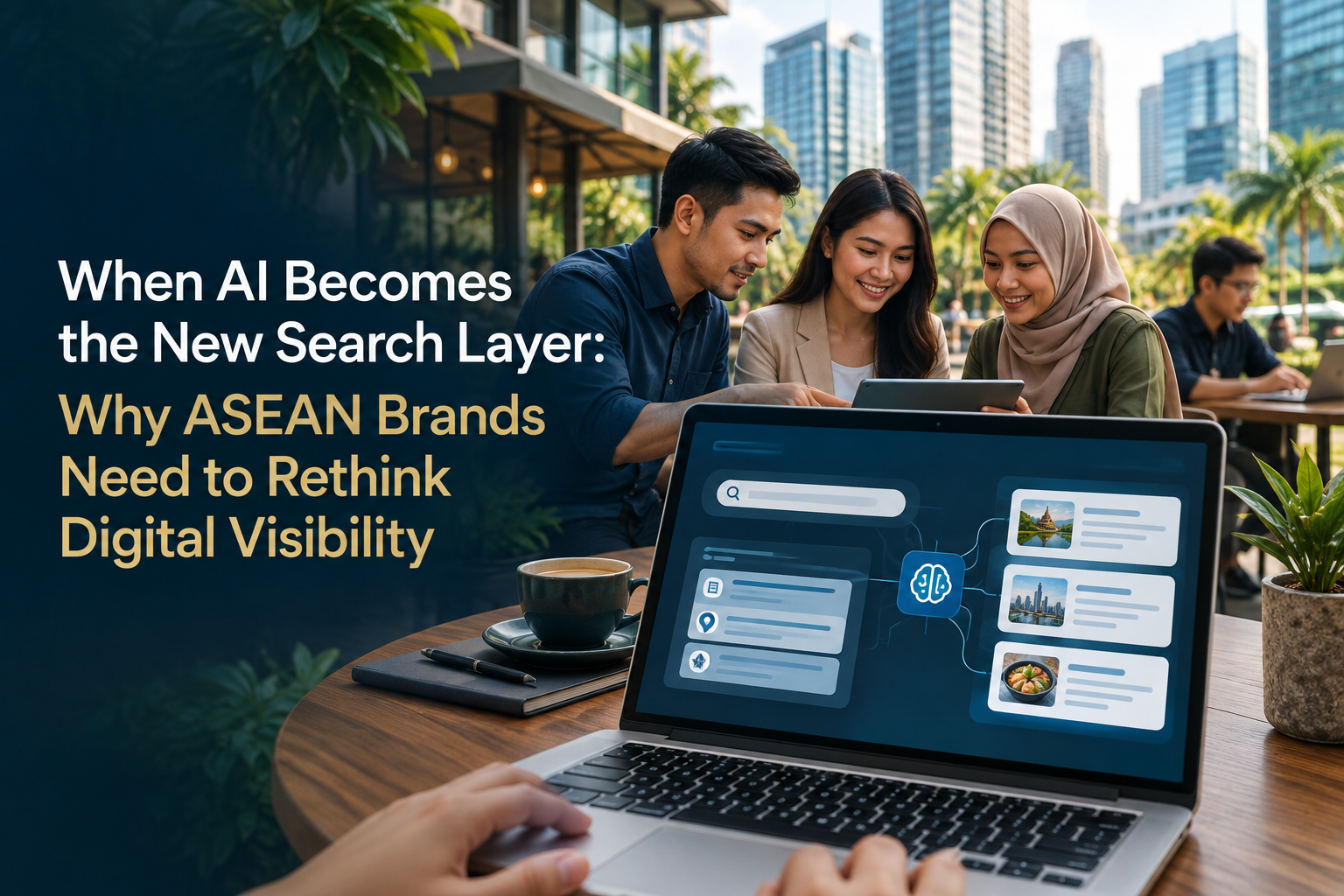
Instead of scrolling through search results, consumers can now ask platforms such as ChatGPT, Gemini and Perplexity to compare products, explain options or suggest providers. The answer they receive may contain only a handful of brands rather than dozens of links. For ASEAN businesses, that creates a different kind of discoverability challenge: being searchable is no longer the same as being visible.
That is where Generative Engine Optimisation, or GEO, comes in. SEO helps search engines understand and rank webpages. GEO is concerned with something slightly different: whether AI systems can understand a brand well enough to include it when answering a consumer’s question.
That changes the question marketers need to ask. It is no longer only “Can consumers find us?” It is also, “What happens when they ask an AI about our category?”
The New Competition Is Not Just for Clicks. It Is for Inclusion
This changes the nature of digital competition. Consider a consumer searching for skincare in Singapore. A traditional search might produce pages of brands, retailers and reviews. An AI assistant could instead be asked: “Which skincare brands in Singapore are suitable for sensitive skin and available under SGD 50?”
The difference is important. The consumer is not simply looking for information anymore. They are asking the platform to filter the information for them.
This behaviour is becoming increasingly relevant across ASEAN. AI adoption is growing across markets, including Indonesia, the Philippines, Singapore and Vietnam, although usage patterns differ from one country to another.
For brands, this means GEO should not be treated as another isolated marketing tactic. It needs to become part of how they think about digital discoverability. (Source: Aseanbriefing)
From Keyword Stuffing to Answer Building
The biggest mistake would be to treat GEO as simply “SEO with a new name.” The more important shift is from optimising for keywords to building information that answers real questions. If a customer asks what a product does, who it is for, how it compares with alternatives, or where it is available, those answers should already exist clearly across the brand’s digital presence.
This changes the role of content. Product pages, FAQs, comparison guides, expert articles and case studies should not simply fill a content calendar. Together, they should form a reliable information system that helps both consumers and AI platforms understand the business.
ASEAN Cannot Be Treated as One Digital Market
AI discovery may be global, but the information behind those answers is still local. ASEAN is not one digital audience. Consumers in Indonesia, Singapore, Vietnam and the Philippines may ask similar questions, but their language, terminology, purchasing habits, regulations, competitors and trusted sources can differ significantly. Localisation therefore needs to go beyond translation. Regional ambition needs local relevance.
For brands expanding across the region, this means GEO cannot be built around one generic ASEAN content strategy. A brand entering Indonesia may need to address different consumer terminology and questions from one targeting Singapore, while Vietnam or the Philippines may require different combinations of educational content, local authority and digital channels. (Source: ASEAN Briefing)
Trust Becomes a Marketing Asset
There is another shift marketers need to pay attention to: digital visibility is becoming increasingly tied to digital credibility.
When an AI system answers a consumer’s question, the information it surfaces can depend on the sources and signals available to it. That makes a brand’s reputation across the wider digital ecosystem more important—not just what the brand says about itself.
Clear business information, expert commentary, original research and credible third-party coverage can all strengthen that digital footprint. The goal is not to publish more content simply for the sake of visibility. It is to create useful and credible information that helps both consumers and AI systems understand why the brand belongs in the conversation.
The Smart Move: Build for Humans, Structure for Machines
The rise of GEO does not make traditional SEO irrelevant. It adds another layer to digital strategy. Brands still need technically sound websites and strong search visibility, but they also need information that is easy for AI systems to interpret: clear answers, well-structured pages, local context and credible references. SEO helps a brand get found. GEO increasingly asks whether the brand can be understood well enough to be part of the answer.
This also raises a new measurement question. Beyond rankings and traffic, marketers may need to examine whether their brand is being surfaced when consumers ask AI about their category, competitors, or specific needs. The question is not simply whether the brand is visible. It is whether the brand is entering the consideration set.
That will require marketers to think differently about discoverability: not just where a brand ranks, but whether its digital presence gives AI systems enough context to understand when and why it should be mentioned. AI-powered discovery is still evolving, and GEO is not a replacement for SEO. But the direction is becoming clearer: digital visibility is moving from competing to appear in a list of links to competing to become part of the answer.
For ASEAN brands, that makes the challenge bigger than optimisation. It is about building a digital presence that is clear enough to understand, credible enough to trust, and local enough to remain relevant across markets.
The future of search may not be about owning the result. It may be about earning a place in the answer.