


India’s digital commerce ecosystem is at a pivotal moment. As online shopping expands rapidly across smaller cities and the sector is projected to reach $200 billion by 2026 (Morgan Stanley forecast), the industry faces mounting regulatory scrutiny and consumer demands for transparency, trust, and sustainable practices. (Source: IBEF) Against this backdrop, five of India’s most influential e-commerce and quick-commerce players have joined forces to reshape how the sector engages with regulators, consumers, and stakeholders.
Amazon India, Eternal (parent company of Zomato), Swiggy, Meesho, and Zepto have launched the Digital Commerce Coalition (DCC), an industry-led platform announced on June 1, 2026, aimed at addressing shared challenges and advancing sustainable growth in India’s fast-expanding digital commerce ecosystem. Notably, Flipkart, India’s largest homegrown e-commerce player, is absent from the founding group. (Source: Mint)
The coalition will be supported by Koan Advisory Group, a New Delhi-based public policy consulting firm serving as its secretariat to oversee research, stakeholder engagement, and convening activities. According to a report by Entrackr, the DCC was formed to address sector issues like customer trust and entrepreneurship, with a dedicated focus on digital marketplaces, gig workers, delivery networks, and local commerce ecosystems. (Source: Mint)
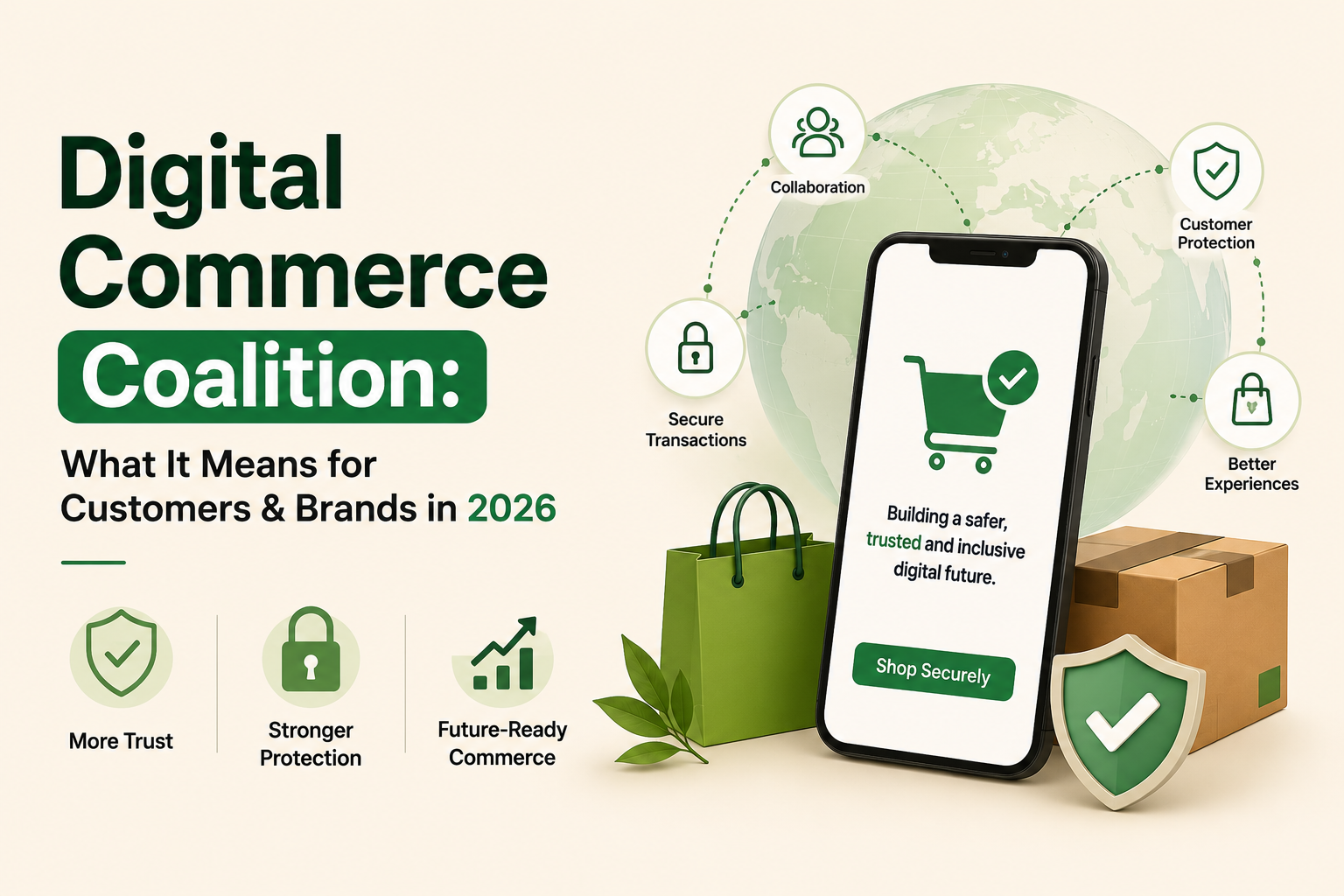
This article examines the three core priorities the coalition brings to customers in 2026, explores what this industry unity means for modern marketers and brands, and analyzes how the DCC signals a maturing shift from aggressive growth to responsible, trust-based expansion in India’s digital commerce market.
What the Coalition Brings to Customers, and Why It Matters
As India’s digital commerce ecosystem matures, regulatory scrutiny and consumer demands for transparency have intensified, creating the need for unified industry standards. The Digital Commerce Coalition (DCC) emerges as a direct response to these challenges, representing a coordinated shift from aggressive expansion to responsible, trust-based growth.
According to the coalition’s official statement, this initiative aims to “strengthen people and planet-positive outcomes in India’s digital commerce ecosystem” by creating a collaborative platform where key industry players work together on shared priorities rather than competing in silos. (Source: DCC – Digital Commerce Coalition)
The coalition has identified three core priorities that directly impact customers in 2026:
1. Strengthening Consumer Trust & Safety
Customer trust is explicitly identified as a foundational priority by the coalition. The industry body was formed to address sector issues like “customer trust and entrepreneurship.”
What customers gain:
- Enhanced transaction transparency and secure payment systems across coalition platforms
- Improved data privacy protections and standardized consumer protection practices
- Better delivery timelines and product quality assurance through industry-wide standards
2. Expanding Economic Participation
The DCC prioritizes equitable economic participation, specifically supporting “entrepreneurs and small businesses” in accessing digital commerce ecosystems.
What customers gain:
- Wider access to diverse products from MSMEs and regional brands across India
- More affordable options as small businesses enter the digital marketplace
- Formalized operations ensuring reliability and accountability for smaller sellers
As reported by Inc42, the coalition will serve as a platform for “expanding opportunities for entrepreneurs and small businesses, strengthening supply chains, and contributing to broader economic development”, directly benefiting customers through product diversity and competitive pricing. (Source: Inc42)
3. Promoting Sustainable Growth & Worker Welfare
The coalition commits to people and planet-positive outcomes, addressing environmental responsibility and delivery partner welfare.
What customers gain:
- Eco-friendly delivery options and reduced packaging waste through responsible innovation
- Ethical treatment of gig workers powering the on-demand economy
- Long-term sustainability of India’s digital commerce infrastructure is benefiting future shopping experiences
According to the coalition’s official statement, the industry body will focus on “supporting delivery partners” and “driving positive outcomes for people and the environment across the digital economy”. (Source: DCC – Digital Commerce Coalition)
The Coalition’s Unique Value
The coalition’s collaborative approach ensures improvements in trust, sustainability, and economic participation become industry-wide standards rather than platform-specific initiatives. Unlike individual company efforts, the DCC serves as a platform for stakeholder engagement, knowledge sharing, and thought leadership.
The initiative represents a “platform for policy dialogue, research and knowledge sharing”, meaning customers benefit from unified industry best practices rather than competing company standards. Moneycontrol reports the platform will focus on “improving customer experiences, supporting delivery partners, and expanding opportunities for entrepreneurs and small businesses”, directly translating coalition priorities into tangible customer benefits. These customer benefits also create ripple effects for marketers and brands operating in this ecosystem. (Source: Moneycontrol)
What This Means for Modern Marketers and Brands
1. Access to Standardized Best Practices
Industry-wide guidelines will reduce compliance costs for brands, while unified standards for merchant onboarding, data privacy, and consumer protection create a more predictable operating environment. Brands also gain access to a shared research and knowledge base that enables better market positioning.
2. Level Playing Field for Small & Regional Brands
Enhanced digital market access for MSMEs and regional brands creates new opportunities for brands to reach Tier 2–3 cities with deepening digital adoption. As small businesses enter the digital marketplace, customers benefit from more affordable options through competitive pricing.
3. Data-Driven Consumer Insights
Marketers will gain access to sector-wide data on consumer behavior and trust metrics, along with industry benchmarks for supply chain efficiency and customer experience. This data foundation enables the creation of thought leadership content and evidence-based marketing narratives that resonate with increasingly informed consumers.
4. Enhanced Brand Credibility Through Association
Brands partnering with DCC members can signal trustworthiness and responsible growth to consumers increasingly concerned about data privacy and sustainability. For brand marketers, this means authentic storytelling around sustainability and ethical practices, credibility when marketing environmental or social impact initiatives, and alignment with consumer values around worker welfare and eco-friendly logistics.
5. Supply Chain & Logistics Optimization
With the DCC focusing on supply chain resilience, brands can expect improved last-mile delivery infrastructure across urban and rural India, standardized logistics partnerships reducing operational friction, and better inventory management and faster time-to-market for new products.
Conclusion
The Digital Commerce Coalition marks a defining shift in India’s digital economy, from aggressive expansion to responsible, trust-based growth. As regulatory scrutiny intensifies and consumers demand transparency, five major e-commerce players have chosen collaboration over competition, establishing industry-wide standards for consumer trust, economic participation, and sustainable practices.
For modern marketers and brands, this signals a clear strategic imperative. Trust-building narratives must replace hype-driven campaigns. Authentic storytelling around sustainability and ethical practices becomes a competitive advantage. Regional and MSME partnerships offer new avenues for authentic brand building. Coalition-backed data enables evidence-based content creation, while standardized best practices reduce compliance friction.
The DCC is more than an industry body; it’s a new marketing playbook. In an ecosystem where consumer trust, economic inclusion, and environmental responsibility are now measurable competitive advantages, brands that align with these values will thrive. For India’s digital economy, this marks the beginning of a more responsible, inclusive, and sustainable future. For modern marketers, the question is no longer whether to adapt, but how quickly they can embrace it.