

Every major football tournament brings with it a familiar pattern. Stadiums fill up, television viewership surges, social media timelines become dominated by match highlights, and brands compete aggressively for a share of the conversation. Yet, amid all this excitement, one question often goes unasked: how many of those millions cheering from the sidelines are actually playing the game themselves?
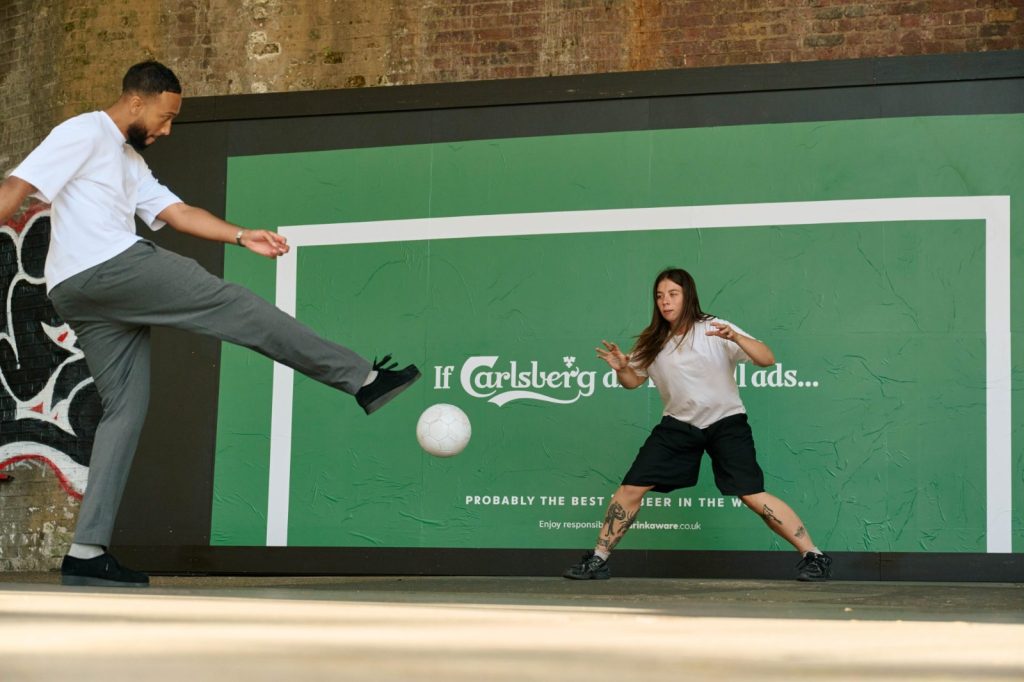
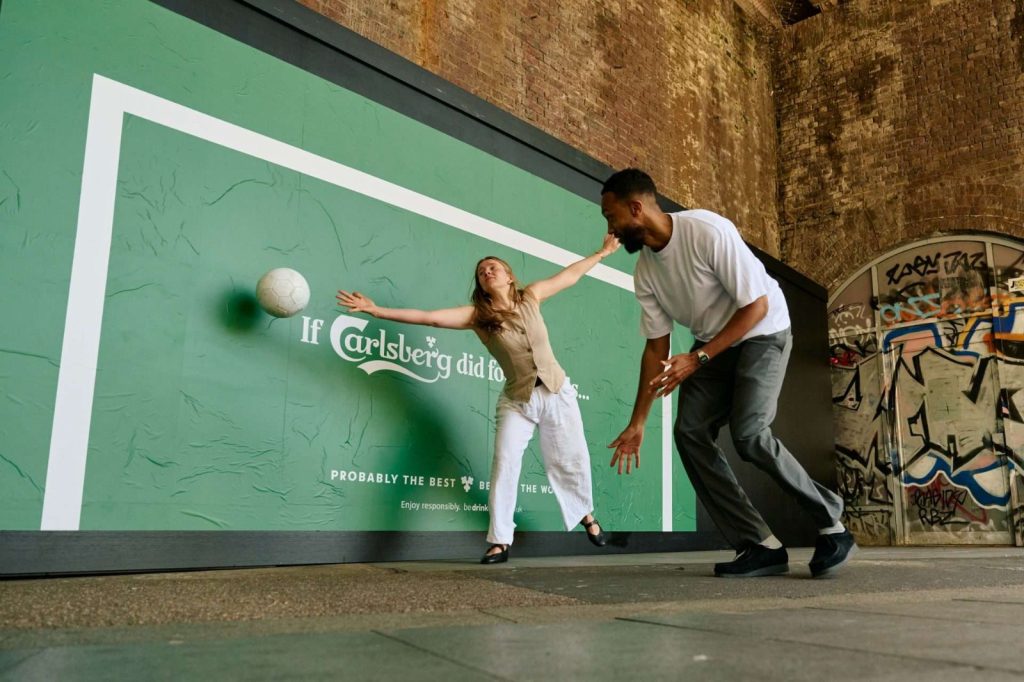
That is the insight behind Carlsberg’s latest campaign, Goal Posters. Rather than creating another football-themed advertisement, the brewer transformed ordinary city walls into playable football goals across London and Manchester, inviting passers-by to stop, kick a ball, and enjoy a spontaneous game. It is a deceptively simple idea, but one that reflects a much larger shift in modern marketing. In an economy where every brand is fighting for attention, the real opportunity may no longer lie in generating impressions but in creating participation. (Source: DrinksRetailing)
Attention without action is a missed opportunity
The campaign begins with a behavioural insight rather than a media one. According to research commissioned by Carlsberg, 75% of people are expected to watch football during the summer, yet one-third have not kicked a ball all year. Separately, 60% say they miss playing football, citing lack of time, teammates or suitable spaces as the biggest barriers.
For marketers, these numbers reveal an important truth. High levels of content consumption do not automatically translate into engagement, emotional connection or real-world behaviour. People may watch endless football content, interact with match-related posts, and discuss games online, but that does not necessarily mean they are experiencing the sport itself.
Many campaigns continue to optimise for visibility because visibility is easy to measure. But visibility alone rarely creates memorable brand relationships. Carlsberg identified something deeper: people were not missing football content; they were missing the feeling of playing football. That distinction transformed the campaign from another sponsorship activation into an experience that solved a genuine human need. (Source: MarketingChief)
Turning advertising into an invitation
To bring this insight to life, Carlsberg partnered with creative agency Fold7 to reimagine traditional flyposters as football goals. Branded in the company’s signature green, the posters were installed on walls and in tunnels in high-footfall locations, including Sutton Walk and Shoreditch Tunnels in London, as well as Bridge Street in Manchester. (Source: DesignRush)
The execution stands out precisely because of its simplicity. There are no digital screens, augmented reality experiences, or QR codes asking people to scan and participate. Instead, the posters do one thing exceptionally well: they encourage people to stop, grab a football,l and play.
By placing the activation within everyday public spaces, Carlsberg removes many of the barriers people associate with playing football. There is no need to book a pitch, organise a team or travel to a sports facility. A commute, a lunch break, or an evening walk can unexpectedly become an opportunity for a kickabout.
As Global Brand Director Lynsey Woods explains, the campaign is designed to celebrate “the part of the game that belongs to everyone” and remind people of the simple joy that first made them fall in love with football.
Participation is becoming marketing’s most valuable metric
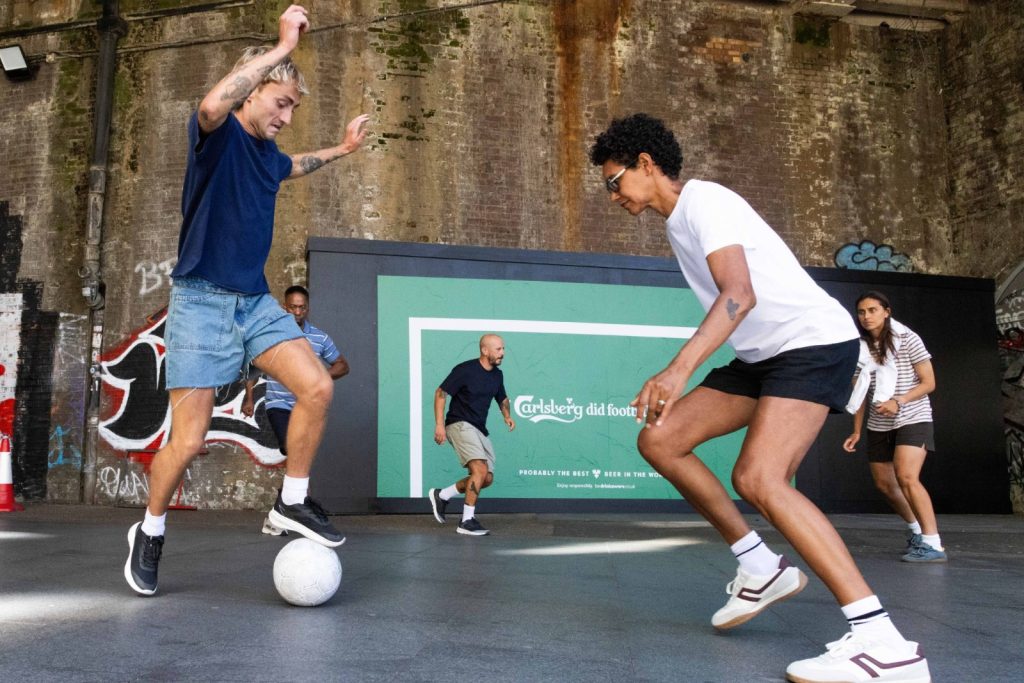
The real success of Goal Posters cannot be measured solely by the number of people who saw the campaign. Its value lies in the number who actually interacted with it.
Carlsberg reports that the installations have already hosted multiple spontaneous kickabouts, turning passive observers into active participants. That represents a different kind of advertising outcome altogether.
Traditionally, outdoor advertising has focused on visibility. Billboards are designed to be seen. Posters communicate messages. Digital screens display creative assets. Carlsberg’s campaign challenges that convention by transforming media into something functional. The wall is no longer simply an advertising surface; it becomes part of the football experience itself.
This reflects a broader shift taking place across brand marketing. Increasingly, consumers remember experiences they help create rather than messages they simply consume. Moments of participation generate conversations, social sharing, and emotional recall that extend far beyond paid media impressions.
In that sense, participation is emerging as a stronger form of attention. It is active rather than passive, voluntary rather than interrupted.
Sponsorship that extends beyond the logo
The campaign also demonstrates how sponsorship can evolve beyond branding placements.
Goal Posters forms part of Carlsberg’s five-year partnership with UEFA National Team Football and revives the company’s iconic “If Carlsberg did…” platform. Rather than merely attaching its name to football tournaments, the brand uses its sponsorship to contribute something meaningful to the communities surrounding the sport.
Chief Marketing Officer Yves Briantais described the initiative as a way of “turning traditional advertising on its head to invest directly back into the community.” That philosophy shifts the role of the brand from sponsor to enabler.
Importantly, beer is not positioned as the centrepiece of the campaign. Football is. Carlsberg’s role is to remove barriers and make the experience more accessible. In doing so, the brand reinforces its long-standing association with football while creating local goodwill, earned media coverage and authentic community engagement.
It is a reminder that the strongest sponsorship activations are often those that improve the experience fans already care about instead of competing for attention within it. (Source: MarketingChief)
What marketers can learn
Carlsberg’s campaign offers lessons that extend well beyond sport.
First, design for participation before designing for visibility. The most memorable campaigns increasingly invite people to do something rather than simply watch something.
Second, build campaigns around genuine behavioural insights rather than trending events. Football provided the cultural moment, but the real opportunity came from understanding why people had stopped playing.
Third, rethink the infrastructure already around you. Walls, streets, bus shelters, and public spaces do not always need to carry advertisements; they can become interactive brand touchpoints. A financial services brand, for example, could transform bus shelters into collaborative savings challenge boards, while a mobility company could use pavements for playful wayfinding experiences that encourage exploration.
As consumers become increasingly selective about what deserves their attention, the brands that stand out will not necessarily be those that create the loudest campaigns. They will be the ones who create the most meaningful participation. In a world overflowing with content, people may forget another advertisement, but they are far less likely to forget the brand that invited them to stop, play, and become part of the story.