

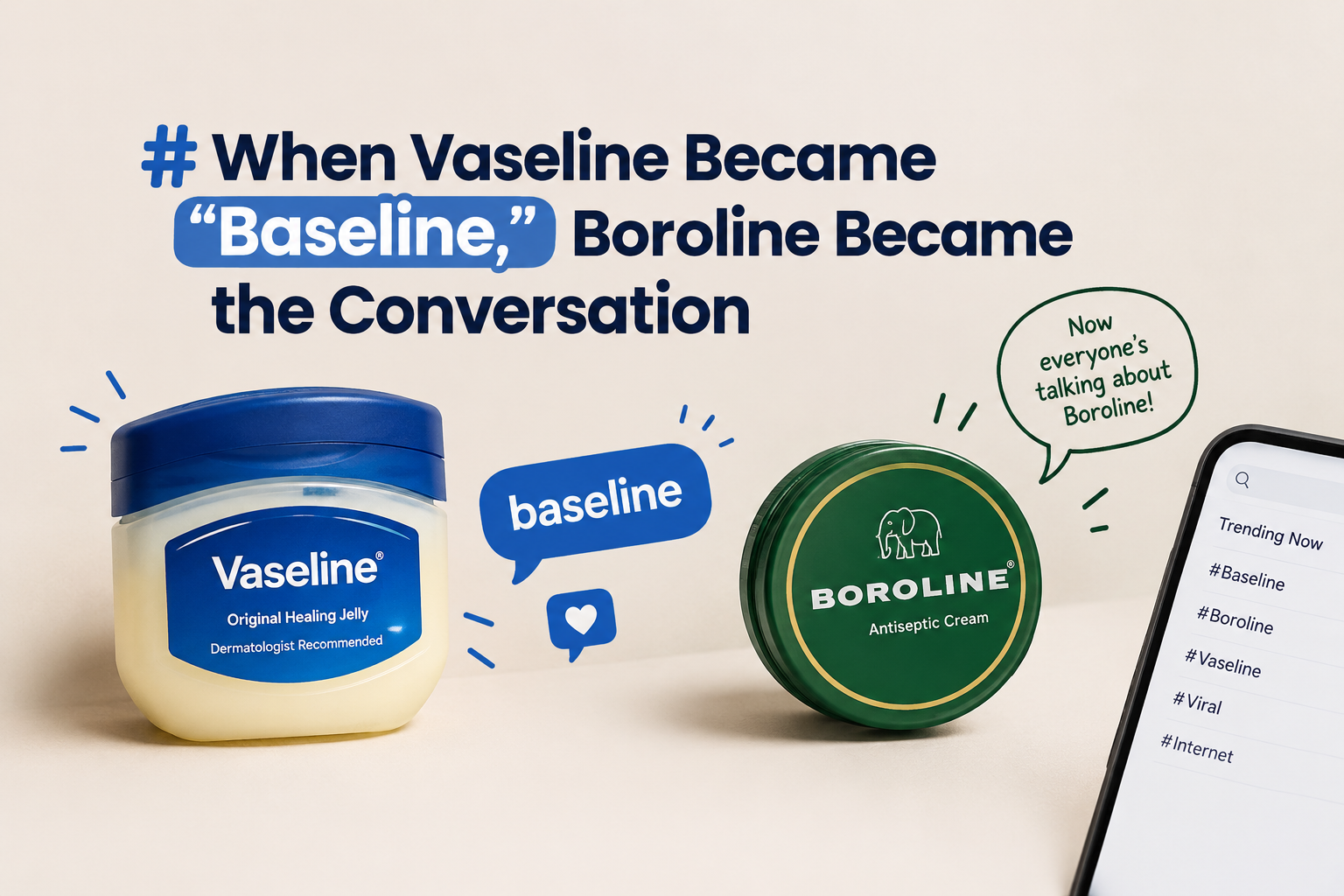
A viral pronunciation mistake turned Vaseline into “Baseline.” But in India, the internet found another name to bring into the conversation: Boroline. At first glance, this looks like another fleeting social-media joke. A Korean creator pronounced Vaseline as “Baseline”; the video went viral, and Vaseline itself leaned into the moment with a playful “Baseline” identity. The original video reportedly crossed 38 million views, turning a simple pronunciation slip into a brand moment. (Source: NDTV)
But the more interesting story is what happened next. Indian creators began comparing “Baseline” with Boroline. Some brought out the familiar green Boroline tin, others made comparison videos, and suddenly a brand that had not created the trend became part of it. That raises a more important marketing question: How does a brand become relevant to a conversation it never entered?
Vaseline didn’t Create the Meme. It Recognised the Moment.
Vaseline’s response is a good example of real-time brand participation. Instead of correcting the pronunciation or treating the meme as irrelevant, the brand played along with it. That was smart because the audience quickly understood what the pun was. Vaseline simply entered a conversation that consumers were enjoying.
This matters because brands often make the mistake of trying to manufacture virality. But virality cannot always be manufactured or worked on. Sometimes the better strategy is to recognise cultural momentum early and participate without over-branding it. Vaseline has had more than 150 years to build that familiarity. Its own history records that the brand was launched in 1870 and eventually became a household staple. (Source: Vaseline)
So when the internet changed “Vaseline” to “Baseline,” people already knew exactly what was being discussed. The brand had the mental availability required to benefit from the Baseline-Fever. And then something particularly Indian happened.
The Internet Remembered Boroline
Boroline wasn’t part of the original trend. Yet creators started bringing it into the conversation. Why? For millions of Indians, particularly generations that grew up with it, Boroline is not simply another skincare product. It is a lifestyle memory.
The brand was introduced in 1929 by Gour Mohan Dutta against the backdrop of the Swadeshi movement. Dutta wanted to create an Indian alternative to imported products, and Boroline eventually became one of the country’s enduring homegrown brands. (Source: boroline) Its identity was built far beyond functional benefits.
The green packaging, distinctive elephant symbol, fragrance, Bengali advertising, radio jingle, and association with everyday family life collectively turned Boroline into a cultural skincare brand. The West Bengal government’s industrial heritage page describes it as having become a household name and notes that it was popularly known in rural Bengal as “Hathiwala Cream.”
That is the real reason Boroline could enter a meme without creating one. The internet did not have to introduce Boroline to people. It only had to remind them that it existed.
The Real Competitive Advantage is not Always Advertising
This is where the Boroline story becomes useful for businesses. A brand can spend millions trying to create awareness. But another level of brand strength exists beyond awareness: association. Boroline has accumulated associations over decades — family, childhood, cuts, cracked heels, chapped lips, winters, grandparents and the familiar green tube.
Its own brand history describes Boroline as a trusted member of Indian families across three generations. That kind of equity cannot be built through one campaign. It is built through repeated presence in people’s lives.
Interestingly, Boroline has also experienced the danger of relying too heavily on heritage. A report noted that the brand had lost significant market share partly because younger consumers were not being attracted to it, and the reminder advertising had weakened. (Source: Economic Times)
That is an important warning. Heritage can make a brand memorable. But relevance keeps it alive. The current “Baseline–Boroline” conversation demonstrates what happens when old cultural memory meets new internet culture.
What Brands should Learn from the Baseline–Boroline Moment
The Baseline–Boroline moment shows that strong brand equity can create relevance even without a planned campaign. While brands often chase trends and viral moments, the bigger opportunity lies in becoming so familiar and culturally rooted that consumers naturally bring the brand into conversations.
Building distinctive associations, staying relevant to changing consumer culture, and recognising organic moments can help brands turn unexpected attention into meaningful brand value.
More importantly, brands should remember that brand building is a long-term game. A trend may last for a few days, but the familiarity that makes consumers instantly recall a brand can take decades to build.
Boroline’s unexpected presence in this conversation is a reminder that when a brand has earned a place in people’s everyday lives, consumers themselves can become its marketers. The strongest form of brand equity is when people remember, reference, and talk about your brand without being asked to.