

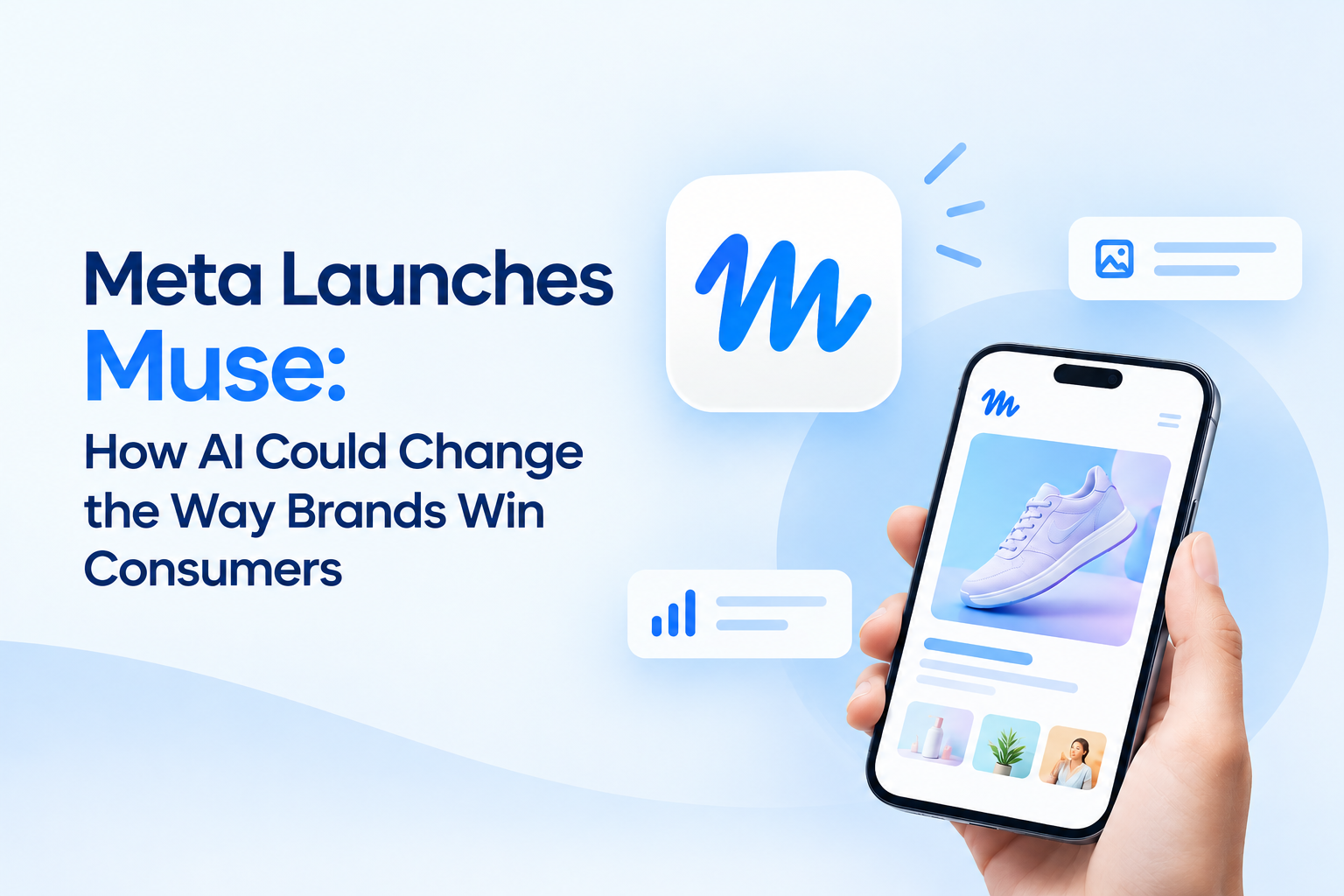
Ever since its advent, the promise of artificial intelligence has largely been about making people faster: drafting an email, finding information, generating an image or summarising a document. Meta’s latest move suggests the next phase will be less about answering and more about action in real time. With Muse, Meta is introducing a personal AI agent designed not merely to tell users what to do, but to actually do it for them. (Source: about.fb )
That distinction matters far beyond the technology itself. If consumers increasingly delegate searches, comparisons, bookings and purchases to AI agents, brands will have to compete not only for human attention, but also for machine-mediated decisions.
From Chatbots to Digital Doers
Muse is built around a simple proposition: tell it what you want accomplished, and it can take the task forward. It can send emails, book travel, open browsers, fill forms and work through multi-step objectives. More importantly, it can continue working even after the user closes the application, returning when circumstances change or when human approval is required.
The technology behind this experience is Meta’s Muse Spark model, operating within what the company calls Muse Secure VM — a dedicated virtual computer where the agent and a user’s connected data are housed. A separate Sentinel system monitors Muse’s activity and controls whether actions can reach the internet. Users can also determine which apps Muse can access and what it is allowed to do within them.
That architecture points to an important evolution in AI. The value of an assistant is no longer determined only by how intelligently it responds. It is increasingly determined by how effectively it can execute an outcome.
The Consumer Journey Could Become Agent-First
This shift could fundamentally change how consumers move from discovery to purchase. A consumer may no longer search ten websites, compare prices, read reviews and manually complete checkout. They could simply tell Muse what they want, along with their preferences and constraints, and allow the agent to handle much of the process.
Muse can even use Stripe’s Link for checkout, with a one-time-use card designed to keep a user’s actual payment details hidden. Meta says Shop Pay and 1Password support are also planned. (Source: about.fb ) For brands, this changes the battleground.
Historically, marketers have optimised for visibility: search rankings, social feeds, advertisements, influencers and increasingly AI-generated content. But an agent introduces another layer — decision visibility. The brand that wins may not be the one with the most memorable advertisement, but the one that an AI agent considers relevant, trustworthy, competitively priced, and suitable for a particular consumer.
That makes product data, reviews, pricing, availability, customer experience, and brand credibility strategic assets rather than back-end details.
Personalisation Is Moving From Content to Action
Muse’s memory capabilities make the shift even more significant. Meta says Muse can remember information a user has previously shared and use it later — such as turning a saved Instagram recipe into a grocery list, planning a dinner around guests’ dietary restrictions or making suggestions based on what matters to the individual.
For brands, this suggests that personalisation could move beyond recommending content to influencing real-world decisions.
The implication is powerful: consumers may increasingly interact with brands through an AI layer that already understands their preferences. That means brands should stop thinking only about “How do we get the consumer to notice us?” and start asking, “Why would an AI agent recommend us when the consumer asks for help?”
The answer will likely come from better products, clearer information, stronger trust signals and experiences that genuinely fit consumer needs.
Meta’s AI Strategy Is Evolving Too
Muse also reflects a broader change in Meta’s approach to artificial intelligence. Meta Chief AI Officer Alexandr Wang’s move from Scale AI to Meta followed the company’s $14 billion investment for a 49% stake in Scale AI, signalling how seriously Meta is investing in its next generation of AI capabilities. (Source: washingtonpost )
That shift is important because advanced AI is becoming less like a software feature and more like infrastructure with commercial, security and societal consequences. Muse is one consumer-facing expression of that larger strategy.
The market’s response reinforces the commercial stakes. Muse is part of Meta’s larger effort to turn its enormous AI investments into a viable consumer business, with the company expecting AI-related infrastructure spending to exceed $130 billion this year. The launch therefore represents more than another AI product; it is a test of whether Meta can turn its growing AI capabilities into products that people will actually use and pay for. (Source: economictimes )
The New Brand Question: Can Your Brand Be Chosen by an Agent?
For marketers, the arrival of personal AI agents should not trigger another rush to add “AI” to every campaign. The smarter response is to prepare for a consumer journey in which the interface between a brand and its customer may increasingly be an intelligent intermediary.
Brands should strengthen structured product information, maintain consistent pricing and availability, build credible reviews, invest in customer experience, and make their value propositions easy for machines to understand as well as humans. They should also rethink measurement: clicks and impressions may matter less if agents increasingly compress the path from consideration to action.
Muse is therefore bigger than a new Meta product. It represents a potential transition from an internet where consumers search, compare, and decide to one where consumers increasingly state an intention and delegate the process.
And when that happens, the biggest competitive advantage may no longer be simply owning consumer attention. It may be becoming the brand that both people and the agents acting for them trust enough to choose.