

For a long time, newspaper advertising followed a familiar formula: a brand bought space, placed its message on the page, and hoped readers would notice. But as audiences divide their attention across digital platforms, brands and publishers are finding new ways to make print stand out.
In 2026, some of the most interesting newspaper campaigns are doing more than displaying products or announcing offers. They are turning pages into interactive experiences, using familiar cultural references to build connections and finding creative ways to make readers pause.
The shift is significant. Rather than treating newspapers as conventional advertising space, brands are beginning to use the medium as part of the creative idea itself.
When a Newspaper Ad Becomes an Experience
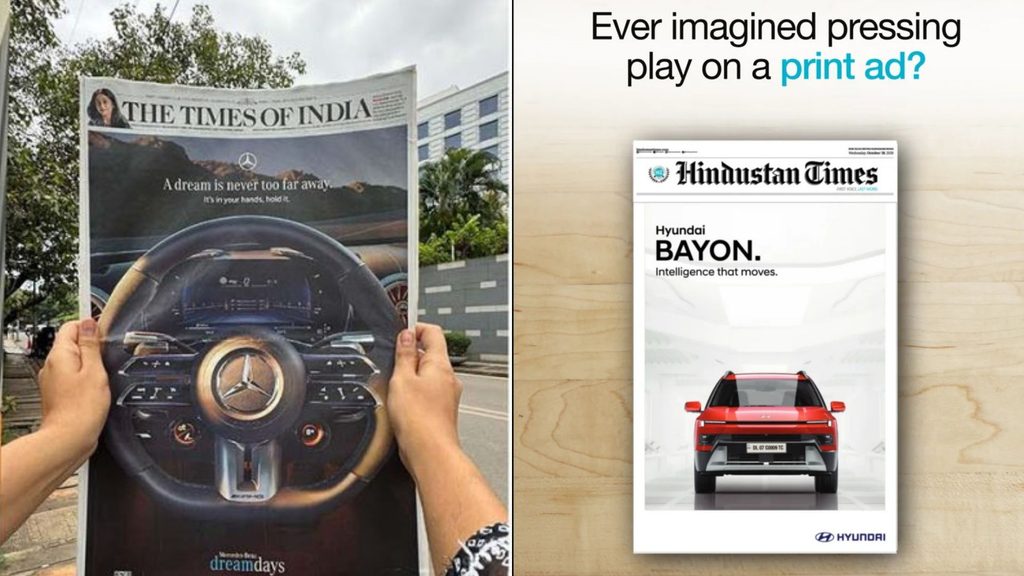
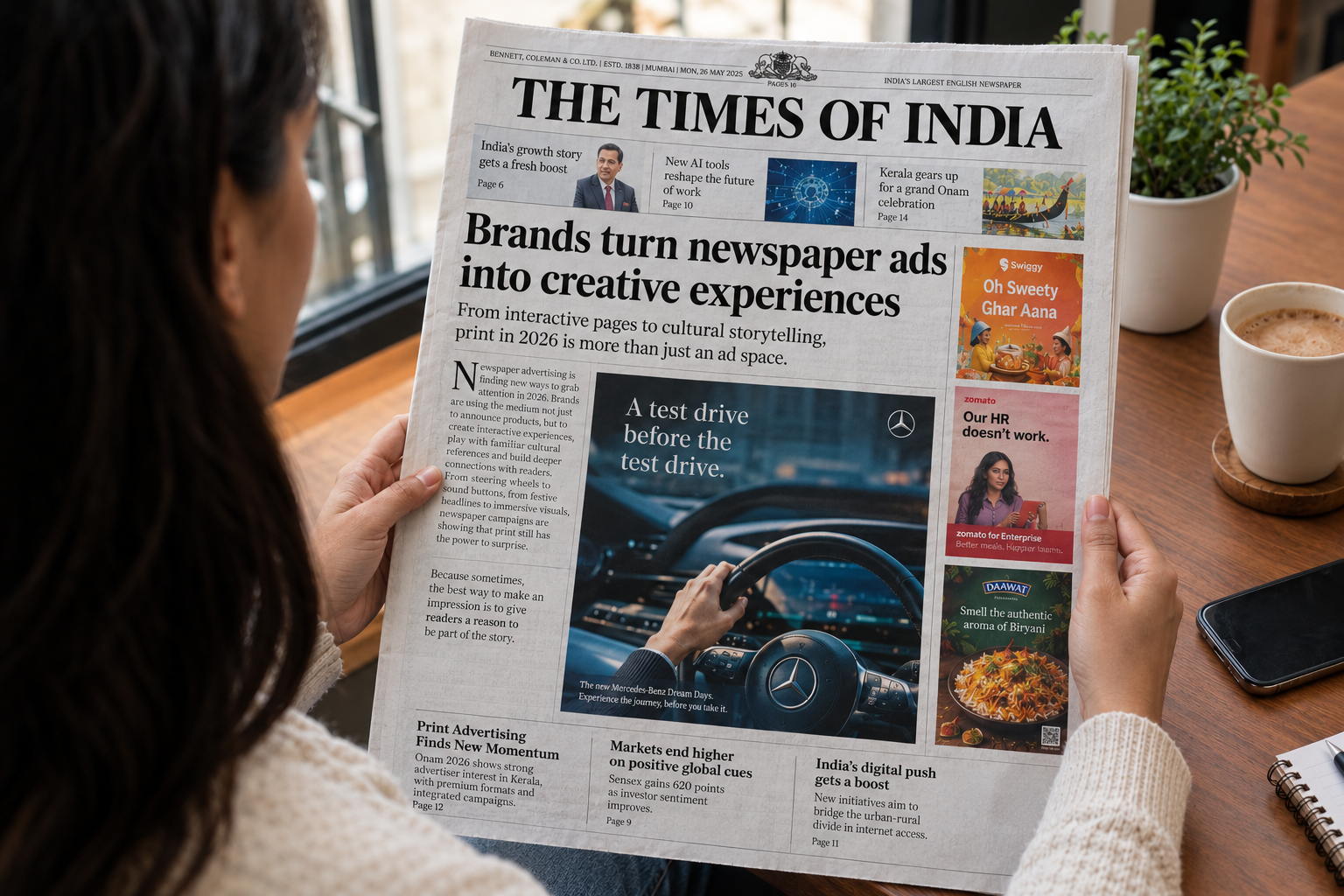
One of the clearest examples is Mercedes-Benz India’s Dream Days campaign. In a front-page print execution, the brand placed an actual Mercedes-Benz steering wheel in readers’ hands. The idea was to bring the experience of driving closer to people, turning a newspaper advertisement into a physical interaction.
BBDO India’s Chairman and CCO, Josy Paul, described it as a “test drive before the test drive”. The campaign extended across print, retail, connected TV, digital, and social platforms, but the newspaper execution gave its central idea a tangible form. (Source: Adobo Magazine)
Hyundai BAYON took a similar approach, but introduced sound into the newspaper experience. Its front-page advertisement in Hindustan Times featured a physical button that readers could press to hear an AI-generated voice describing the car. The execution connected directly with the vehicle’s AI voice assistant, allowing the advertisement to demonstrate a product feature instead of simply talking about it.
Google Photos also explored the possibilities of interactive print through a specially engineered hydrochromic advertisement in Hindustan Times. Readers could wipe a section of the printed photograph to remove unwanted flare, demonstrating the brand’s AI Enhance feature. In both cases, the reader became an active participant rather than a passive viewer. (Source: Exchange4Media)
These campaigns point towards an important possibility for print: its physical nature can offer experiences that a conventional digital advertisement may not easily replicate.
Making Familiar Language Do the Talking
Not every memorable newspaper campaign needs an elaborate physical installation. Sometimes, the headline itself can become the biggest creative asset.
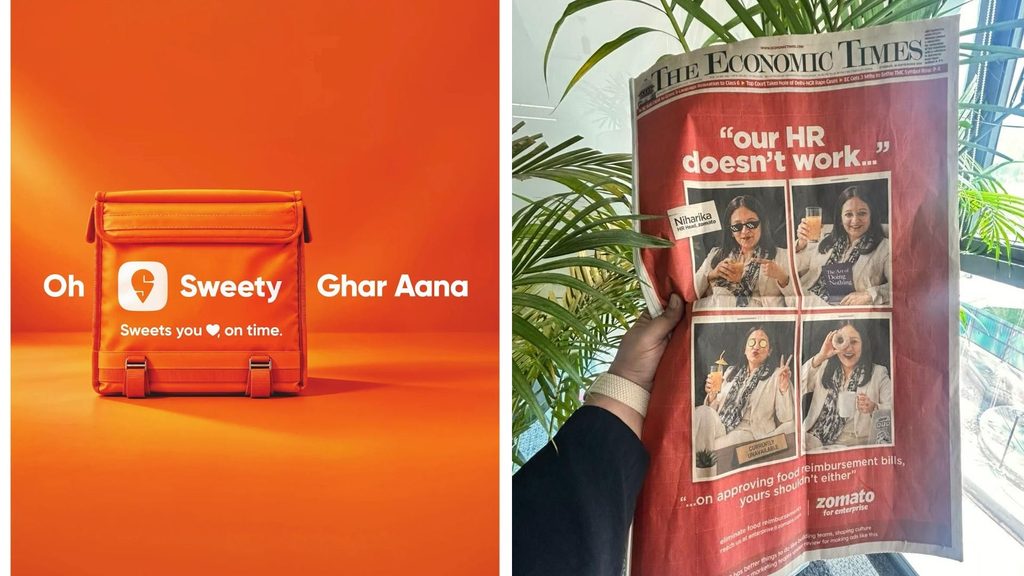
Swiggy‘s Diwali campaign, built around the identity “Sweety”, used familiar Indian expressions and playful wordplay across its newspaper advertisements. Lines such as “Oh Sweety Ghar Aana” and “Dekho Woh Aa Gaya” connected the brand with the excitement of welcoming guests and sharing sweets during Diwali.
The orange visual identity, delivery bag, and festive imagery helped readers connect the wordplay with Swiggy. The campaign also extended beyond newspapers to social media, delivery packaging, outdoor advertising, and other brand touchpoints. (Source: Ads of the India)
Zomato took a different route with a print advertisement for Zomato for Enterprise. Its headline, “Our HR doesn’t work”, initially sounded like an unusual admission from the company. The visual revealed the joke: it featured Zomato’s own HR head, Niharika Mohanty. The humour then led into the brand’s proposition around managing employee meal benefits. (Source: The Brands Beat)
Both campaigns show how a newspaper headline can create curiosity without relying on lengthy product explanations. When the language feels familiar or unexpected, even a simple print execution can earn a reader’s attention.
Bringing the Festive Campaign to the Morning Paper
For some brands, the newspaper continues to play an important role in a much larger media plan.
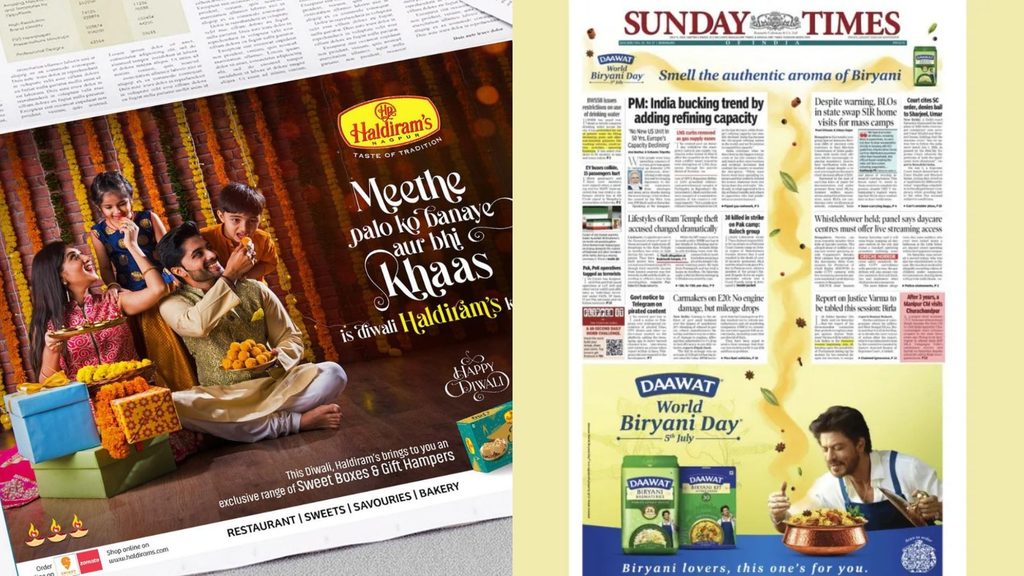
Haldiram‘s “Haldiram’s Se Bani Khaas Diwali” campaign brought together print, outdoor advertising, celebrity collaborations, regional creators and quick-commerce partnerships. Its newspaper presence spanned several publications, including Bombay Times, Bangalore Times, Maharashtra Times, Navbharat Times, and Dainik Bhaskar.
The campaign’s presence across different markets helped carry a consistent festive message while its regional celebrity collaborations added local relevance. Partnerships with Blinkit and Zepto also connected the campaign with the point of purchase. (Source: Curly Tales)
Daawat, meanwhile, used the newspaper’s front page to celebrate World Biryani Day. Its aromatic print campaign featured spices, visual elements representing fragrance, and the headline “Smell the authentic aroma of Biryani”. A QR code connected readers to the brand’s products. While a newspaper cannot physically reproduce the smell of food, the creative used familiar sensory associations to make the product more memorable. (Source: afaqs!)
Also Read: Beyond the Festive Ad: Giving Consumers a Role in Diwali Marketing – TrustCircle
The Bigger Shift in Newspaper Advertising
These campaigns reflect a wider change in how brands are thinking about print. The opportunity is no longer limited to securing a prominent page or a large advertisement. It lies in finding something meaningful that the newspaper format can add to the campaign.
That could mean an interactive feature, an unexpected headline, a culturally relevant message, or a creative demonstration of a product. It also calls for closer collaboration between brands, agencies, and publishers, particularly when an idea requires custom production or a different use of the page.
Not every campaign needs to be interactive to be effective, and novelty alone does not guarantee results. The creative execution must make sense for the product, the audience, and the message.
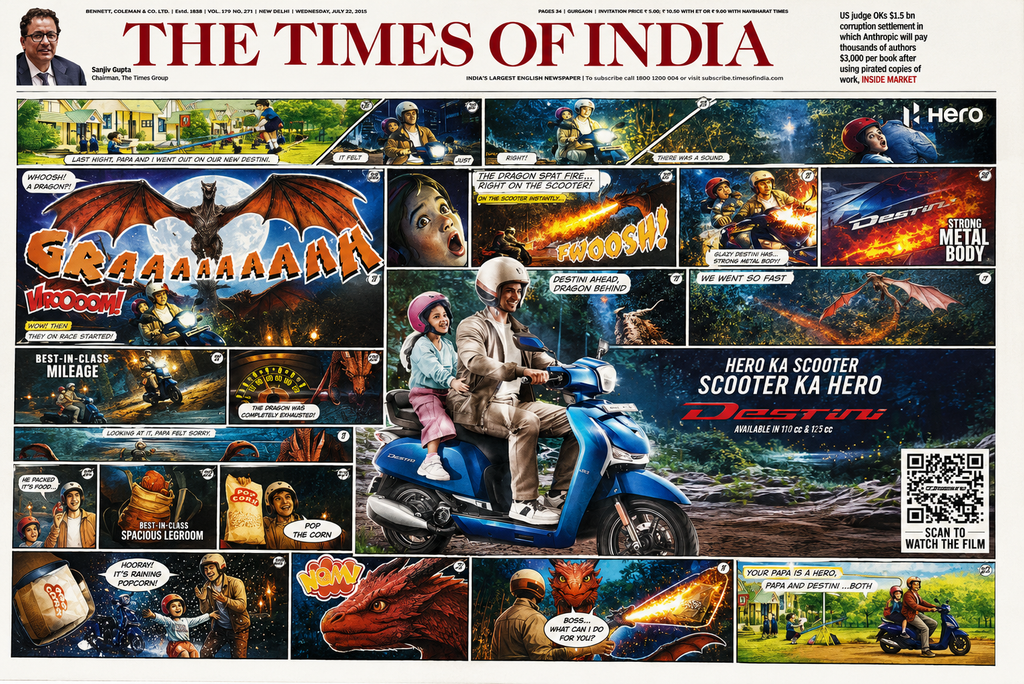
Hero MotoCorp‘s “Hero Ka Scooter, Scooter Ka Hero” campaign offers a related lesson in storytelling, although it was a video-led campaign rather than a newspaper execution. By placing the Destini scooter’s features inside a child’s imaginative adventure with her father, the brand made product benefits part of an emotional story instead of presenting them as a list of specifications. (Source: Power On Wheel)
Print Advertising Finds New Momentum
The growing interest in creative print campaigns comes at a time when newspapers continue to hold their ground in important regional markets. Kerala’s Onam 2026 advertising season offered an early indication of this.
An Adgully report noted that print remained influential in Kerala because of its local reach and credibility. Varghese Chandy of Malayala Manorama expected print advertising to grow compared with the previous Onam season, while Mathrubhumi also reported advertiser demand approaching usual seasonal levels.
Publishers are also offering premium formats such as front-page jackets, French windows and special editions, while combining print with digital, social media and on-ground activations. This points to a larger shift: advertisers are increasingly planning campaigns around audiences rather than treating each media channel as a separate investment. (Source: Adgully)
The Next Chapter of Print Advertising
The real lesson from these campaigns is that a newspaper advertisement does not have to be leveraged like a traditional advertisement. It can invite readers to interact, make them smile, bring a familiar emotion to life, or demonstrate something they would otherwise only read about. Each brand found a different way to use the medium, but the thinking behind them was similar: give people a reason to stop and pay attention.
For brands, this means rethinking the question they bring to a newspaper campaign. Instead of asking how much space they need or how prominently their logo will appear, they can ask what the reader will take away from the experience. Does the idea make the product easier to understand? Does it connect with a cultural moment? Does it leave behind something worth remembering?
Digital platforms may offer speed, targeting, and measurable interactions, but print has a physical presence that brands can turn into a creative advantage. The future of newspaper advertising may not depend on how often brands appear on the page, but on how creatively they use it. Because in a newspaper full of stories, the most effective advertisement may be the one that gives readers a story of their own.