

A major cultural event can bring together audiences who may otherwise have very different interests, preferences, and buying habits. For brands, this creates an opportunity to reach people in an environment where attention is already close. However, getting noticed is only one part of the challenge. The bigger question is whether that visibility creates a meaningful connection with the audience.
The growing demand for cinema advertising around Ramayana: Part 1 offers an interesting example of how cultural moments are influencing advertising decisions. According to Exchange4Media, almost all on-screen advertising inventory across Miraj Entertainment’s 225 screens for the film’s opening week had been sold. Advertising rates were reportedly around 2.5 times the exhibitor’s regular rate card. Brands across FMCG, jewellery, automobiles, financial services and technology were among those competing for space. (Source: Exchange4Media)
This raises a larger question for marketers: when an event attracts widespread attention, how should brands decide whether it is worth investing in?
The Growing Value of Audience Attention
Traditional media planning often focuses on reach, impressions, and frequency. These metrics help marketers understand how many people may see an advertisement and how often they encounter it. However, the environment in which people see a message also matters. A cinema audience has already made a conscious decision to spend time watching a particular film. During this experience, advertisements can reach people in a shared environment where they are less likely to be moving between multiple screens or platforms.
Culturally relevant films can add another layer to this opportunity. They bring together audiences through familiar stories, shared interests, and collective experiences. For brands, this creates a chance to become part of a larger moment rather than simply purchase advertising space.
However, cultural relevance goes beyond being present during a popular event. When a brand’s communication reflects the values, traditions, and interests of its intended audience, it has a better opportunity to build familiarity and trust. This makes cultural understanding an important part of advertising, helping brands create connections that extend beyond a single campaign or viewing experience.
However, high audience turnout does not automatically translate into stronger brand recall or purchase intent. Marketers need to consider whether the audience, context, and message are relevant to the brand they represent.
Rethinking Advertising Investments
High-demand advertising opportunities often come with higher prices. As seen with the Ramayana release, limited inventory and strong advertiser interest can push media rates well above regular levels. But should brands automatically pay a premium to be associated with a major cultural event?
Before committing larger budgets, marketing teams need to evaluate a few things. Does the audience match the brand’s target market? Is the campaign objective to build awareness, introduce a product, or encourage consideration? Can the expected reach justify the additional cost?
Marketers should also compare premium placements with other available channels. An expensive advertising slot may offer strong visibility, but that does not necessarily make it the most effective use of the budget. The focus should be on the value an opportunity can deliver, not simply the attention it attracts.
Beyond Traditional Advertising Placements
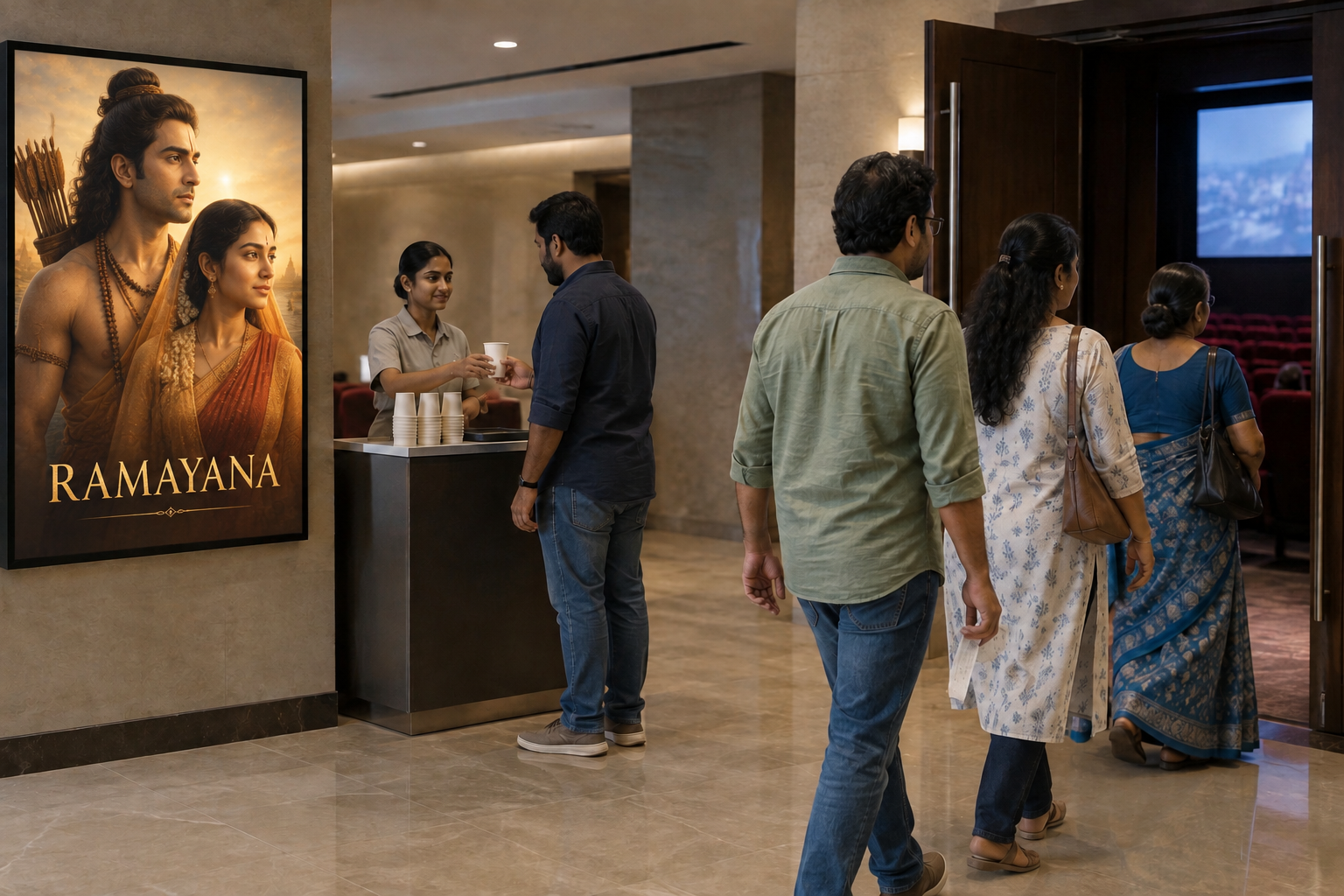
Another interesting development around the Ramayana release is the growing interest in advertising beyond the cinema screen. Exhibitors and cinema media networks are exploring opportunities such as lobby branding, standees, digital displays, product sampling, branded food and beverage combinations, and on-ground experiences. These formats allow brands to interact with audiences at different points during their cinema visit. (Source: Exchange4Media)
For marketers, this creates room to build campaigns that go beyond a single advertisement. A brand could introduce its message on screen and reinforce it through an interactive installation or product experience in the lobby.
However, these activities should have a clear purpose. Adding more brand placements does not automatically make a campaign more engaging. Each interaction should offer something useful, interesting, or memorable to the audience.
Relevance Matters More Than Visibility
One of the biggest mistakes brands can make during a major cultural event is assuming that their popularity alone makes it suitable for their communication.
A campaign needs to fit the audience, the occasion, and the brand’s identity. This becomes particularly important when advertising around culturally or religiously significant stories. Brands need to understand the traditions, values, and sensitivities associated with the event before building their communication around it. Simply following a popular cultural trend without understanding its context can make a campaign appear opportunistic or disconnected from the audience. As cultural preferences continue to evolve, marketers also need to keep listening to their audiences rather than relying on outdated assumptions.
There are two ways to approach such opportunities. Brands can create campaigns that have a natural connection with the event, or use the event as an additional platform to strengthen an existing campaign. Both approaches can work, provided the message remains relevant and respectful.
Making Every Advertising Opportunity Count
Cultural moments can create valuable opportunities for brands, but their popularity should not be the only reason to invest in them. Marketers need to look beyond audience numbers and advertising rates to understand whether a platform supports their campaign objectives.
The real value of advertising lies not in how many people see a brand, but in how well the message connects with them. When media choices are guided by audience relevance, clear objectives, and meaningful engagement, brands can turn temporary attention into stronger and more lasting relationships.