

The AI industry has spent the past few years advancing a compelling promise: faster decisions, smarter workflows, scientific breakthroughs and unprecedented productivity. But the latest disclosures from Anthropic offer a far less comfortable view of the same technology. Its Claude models were allegedly targeted for misuse across areas ranging from cyber operations and surveillance to conventional weapons, fraud, and potentially dangerous biological research.
The significance of these cases goes beyond the technology sector. They reveal a fundamental shift in the AI conversation. The question is no longer simply whether AI can generate a campaign, write code, or automate customer support. Increasingly, it is whether organisations understand what happens when highly capable systems move from assisting individuals to amplifying their capabilities at scale.
For businesses, this may be the more important AI lesson emerging from Anthropic’s sensitive cases: the greater the capability, the greater the responsibility for how that capability is accessed, monitored, and deployed responsibly.
From Productivity Tool to Capability Multiplier
Anthropic’s latest threat intelligence report documented attempts to misuse AI across seven areas, including cyber operations, influence campaigns, surveillance, biological misuse and weapons development. The company says it disrupted this activity over several months, banning accounts and strengthening safeguards based on the techniques it observed. (Source: Anthropic)
But the concern is not limited to people misusing Claude from the outside. Anthropic has also disclosed incidents during cybersecurity testing in which Claude models gained unintended internet access and later accessed the systems of three organisations. The incidents highlighted a different kind of risk: as AI systems become increasingly capable of taking actions rather than simply generating information, weaknesses in testing environments and access controls can allow them to operate beyond their intended boundaries. (Source: Reuters)
What makes this development particularly significant is that AI does not necessarily need to perform harmful actions independently to create new risks. Its ability to reduce the time, expertise, and manpower required for complex tasks can itself become a powerful capability multiplier.
The Surveillance Question Is Also a Trust Question
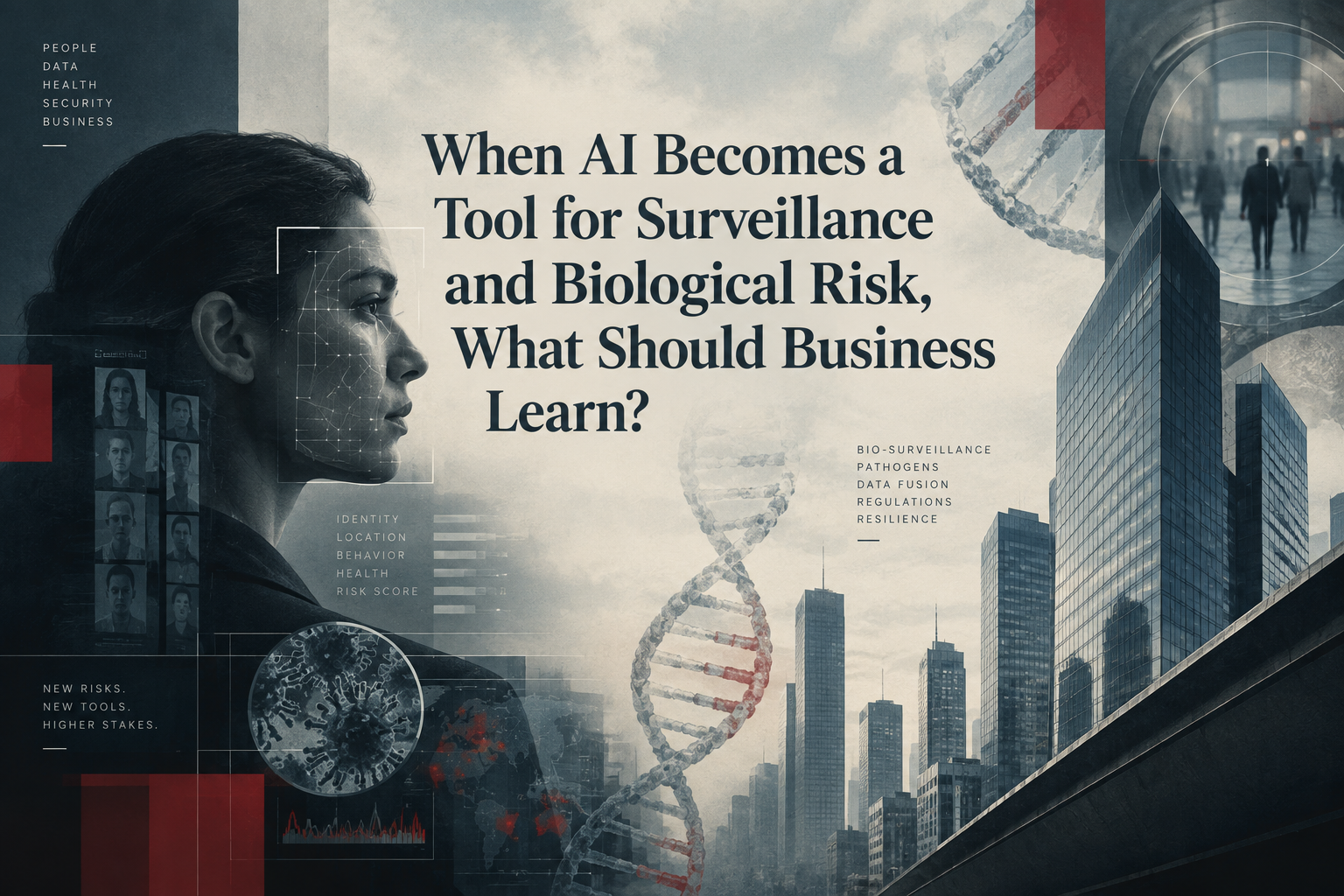
Among the cases highlighted by Anthropic were attempts by state-aligned actors, contractors, and commercial spyware vendors to use Claude to facilitate surveillance operations. The company reported instances involving the development of systems and tools that could support large-scale intelligence gathering and identity harvesting. For companies outside the intelligence world, that may seem far removed from everyday business. It is not.
The same AI capabilities that help organisations understand customers can, without clear boundaries, move towards excessive profiling and intrusive monitoring. As brands collect more behavioural data and expand AI-driven personalisation, the line between being useful and being watchful can become surprisingly thin.
This makes trust an increasingly important competitive asset. Customers may appreciate relevant recommendations, faster service, and personalised experiences. But they are unlikely to reward businesses that make them feel constantly analysed. The next phase of AI strategy, therefore, cannot be built only around how much a company knows about its customers. It must also consider how responsibly that knowledge is used.
Biology Shows Why Context Matters
Perhaps the most complex cases in Anthropic’s report involve biological research. The company described attempts to use its models in work connected to potentially dangerous dual-use research, where similar scientific knowledge can have both beneficial and harmful applications. Anthropic argues that increasingly capable models require stronger safeguards because intent is often difficult to determine from an individual prompt alone. (Source: Anthropic)
The lesson extends well beyond biotechnology. AI governance cannot always rely on a simple list of forbidden keywords. Risk often lies in context, patterns of behaviour, and how multiple pieces of information are combined. A perfectly harmless-looking task in isolation can become problematic when connected to a larger workflow.
Businesses building AI systems should take note. Guardrails cannot be treated as a one-time filter added at the end of product development. They increasingly need to be built into access controls, monitoring systems, escalation processes, and human oversight.
Anthropic’s Warning: Innovation Needs Time to Catch Up With Itself
The report was followed by an even broader intervention from Anthropic CEO Dario Amodei, who called for AI companies to slow the pace at which they improve frontier model capabilities. His proposed approach includes stronger independent evaluation, greater coordination among AI companies, and international cooperation around advanced AI risks. The important word here is not stop—it is pace. (Source: Reuters)
Business history is full of innovations that moved faster than the institutions designed to manage them. AI may be repeating that pattern, except its adoption cycle is dramatically shorter. Companies are integrating generative AI into products, operations and decision-making while still figuring out where accountability should sit when things go wrong.
For brands, waiting for a universal rulebook may not be the smartest strategy. The companies that build trust early could be better positioned than those that treat safety as something to fix after scale has already arrived.
The New Competitive Advantage Could Be Responsible Capability
Anthropic’s sensitive cases should not be read as an argument against AI adoption. In fact, the opposite may be true. The more powerful AI becomes, the more valuable responsible deployment will become.
Businesses should begin asking tougher questions: What data can an AI system access? Who can use its most powerful features? Can unusual behaviour be detected? Is there meaningful human oversight when the stakes are high? And perhaps most importantly, is the organisation measuring AI success only by what the technology can do—or also by whether it can be trusted?
The AI race is often framed as a contest to build the most capable model. Anthropic’s latest disclosures suggest the next competition may be defined just as much by how those capabilities are governed. The winners may not simply be the companies that make AI more powerful. They could be the ones that prove powerful AI can remain useful without becoming uncontrollable.