

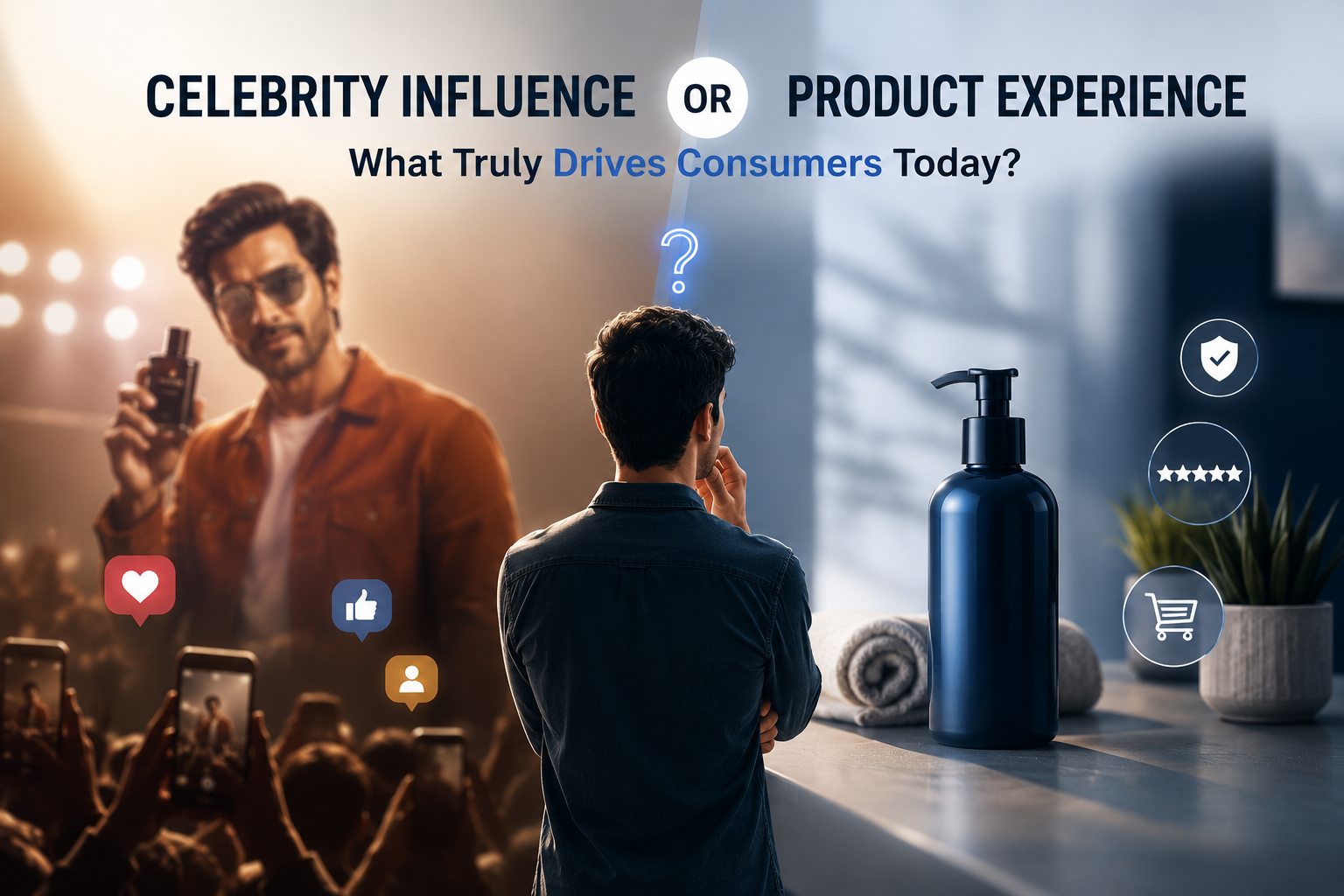
In 2026, advertising is competing with more than rival brands. It is competing with saturated feeds, faster scrolling, and consumers who are increasingly cautious about what they trust. That is why celebrity-led campaigns still matter: a familiar face can stop attention faster than almost any other device. But attention alone is not persuasion. The real challenge for marketers is whether that first glance turns into belief in the brand and interest in the product.
The environment itself helps explain the shift. DISQO’s 2026 consumer research found that 49% of consumers consider ads worth their attention when they help them discover something they want, while 48% said they recognize AI-generated ads when the tone feels less human or emotional. That suggests audiences are not rejecting advertising outright; they are rejecting messaging that feels thin, generic, or disconnected from real value. In that context, a celebrity can open the door, but the product still has to justify the attention it receives. (Source: DISQO)
This distinction is especially relevant in India, where the scale of digital media is enormous. ET Brand Equity-Ipsos estimates that digital ad spend in India will grow 15% to ₹56,400 crore in FY2026, accounting for 46% of the market. (Source: IPSOS) Cloud9 Digital’s 2026 statistics also point to a crowded digital environment, with 467 million active social media users in India and digital ad spend reaching ₹1.2 trillion. (Source: Cloud9 Digital) In a market that large, celebrity presence can deliver reach quickly, but reach is only the first step.
That is why category fit matters so much. A celebrity endorsement works best when the association feels natural, not forced. If the personality has a believable connection to the product, the audience is more likely to see the message as credible. If the fit feels superficial, the celebrity may become the headline while the brand becomes an afterthought. The strongest campaigns use fame as a bridge to relevance, not as a replacement for it.
Consumer trust is another reason this balance matters. Deloitte’s 2026 Digital Consumer Trends found that 70% of people wish they spent less time on their devices, and 59% say they see misinformation more frequently online. (Source: Deloitte) Those numbers point to a more skeptical audience, one that is not simply passively absorbing whatever it sees. In that environment, celebrity visibility can still cut through, but only if the message feels believable and the product has something tangible to say.
That is also why product strength still matters more than ever. A celebrity can help a campaign get noticed, but it cannot rescue a weak proposition. If the product has no clear differentiator, no compelling use case, or no emotional relevance, the campaign may generate awareness without changing perception. In a crowded market, that kind of short-term visibility may look effective on the surface, but it rarely builds durable brand value.
The most effective campaigns tend to balance both elements.
They use the celebrity to create instant recognition, but they also give the product a meaningful role in the story. That may mean showing the product in use, tying the endorsement to a real benefit, or building the creative around a problem the audience already understands. When that balance is right, the celebrity becomes more than a famous name; it becomes a credibility cue.
There is also a generational shift worth noting.
India-specific reporting has shown that celebrity trust is not automatic among younger audiences. Earlier consumer surveys found that many consumers are skeptical of celebrity-heavy advertising, and Gen Z in particular tends to respond better to voices that feel authentic and personally experienced than to polished star power alone. That does not make celebrity marketing obsolete. It simply means the endorsement has to feel earned, not merely purchased.
The larger lesson is that fame can attract attention, but the product must earn belief.
In 2026, the best brand campaigns are not choosing between celebrity and product. They are designing a relationship between the two that feels credible, useful, and memorable. The celebrity may get the audience to look, but the product is what makes them stay.
If you want, I can also turn this into a more magazine-style version, a sharper trade-journal version, or a version with inline citations cleaned up for publication.