

Every Indian who has ever played cricket in a narrow lane, housing society, or neighbourhood park shares a common memory.
The ball connects perfectly with the bat. For a brief second, it feels like a six. Then comes the sinking realization: the ball is heading straight toward someone’s window.
What follows is equally familiar: a shattered pane, an angry neighbour, and a hurried scramble to identify who hit the shot.
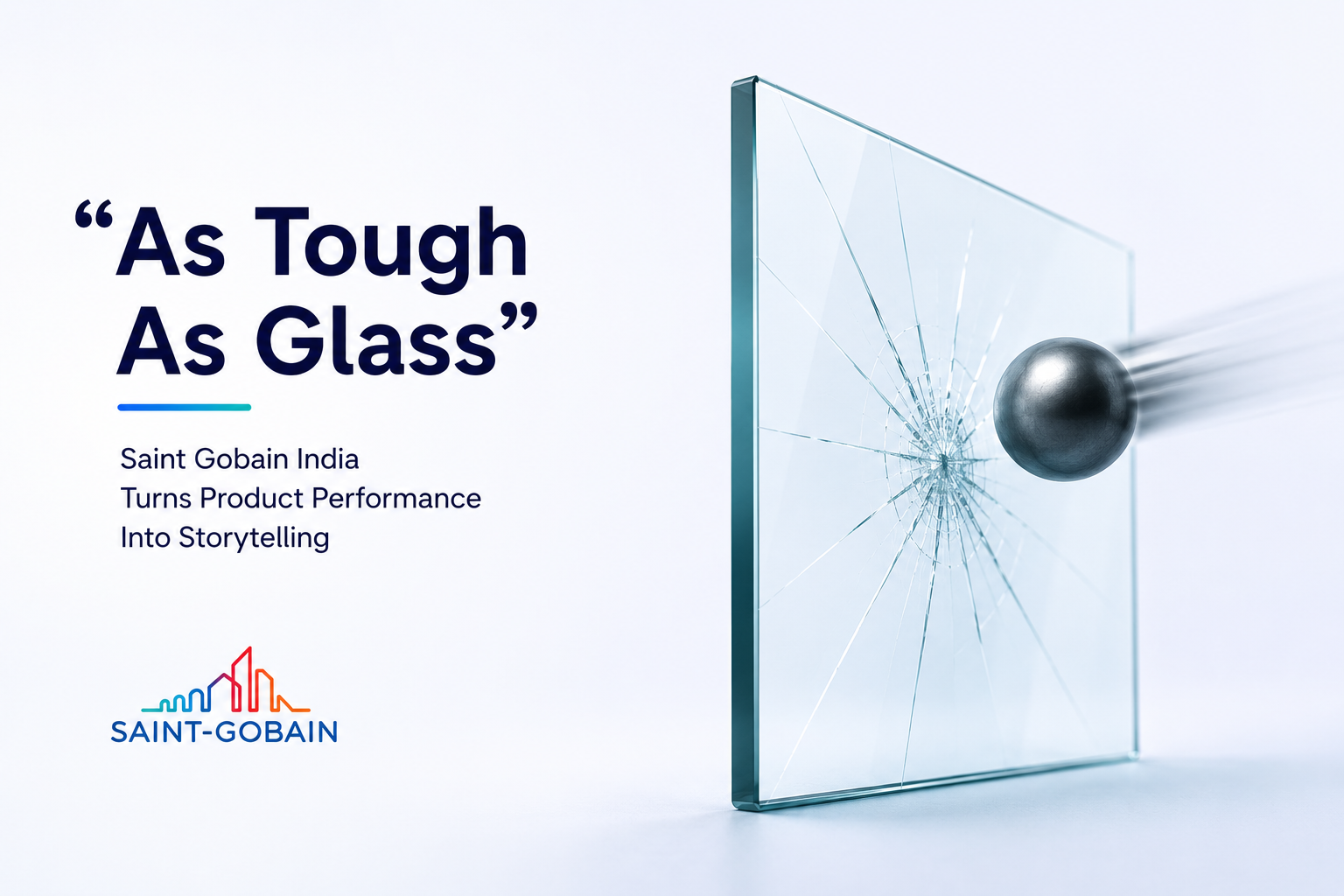
It is this universally shared childhood memory that Saint-Gobain India tapped into with its recent “As Tough As Glass” campaign. And in doing so, the brand delivered a lesson that extends far beyond glass manufacturing.
The campaign is a reminder that some of the most effective marketing isn’t about creating new stories. It’s about finding stories consumers have already lived.
Nostalgia Works Best When It Feels Personal
Over the last few years, nostalgia marketing has become one of the industry’s favourite tools. Brands routinely revisit the 90s, old jingles, retro packaging, and childhood memories in an attempt to trigger emotional connections.
The challenge is that nostalgia often becomes decorative rather than meaningful.
Saint-Gobain’s campaign succeeds because it isn’t borrowing nostalgia; it’s using nostalgia to demonstrate a product benefit.
The insight is instantly relatable. Millions of Indians have either broken a window while playing cricket or feared they were about to. The emotional memory is already embedded in the audience’s mind. The campaign simply uses that memory as the stage for its product demonstration.
The result is a rare alignment between emotion and functionality. Viewers don’t just remember the story; they remember what the product does.
Timing Turned a Good Insight Into a Great Campaign
Perhaps the most underrated aspect of the campaign is when it was launched.
The advertisement debuted during the IPL, a period when cricket dominates conversations, screens, and social feeds across the country.
For marketers, this highlights an important distinction: cultural relevance isn’t just about the message; it’s also about the moment.
Had the same campaign been launched during a different season, it may still have resonated. But during the IPL, the cricket-window connection becomes impossible to ignore. The audience is already immersed in cricket culture, making the campaign feel less like advertising and more like an extension of the moment they are already experiencing.
In an era where attention is fragmented, brands increasingly need to think beyond media placements and focus on cultural timing.
The best campaigns don’t interrupt culture. They enter conversations that are already happening.
The Most Powerful Product Demonstrations Are Built on Familiar Experiences
Marketing often struggles with categories that are considered functional or low-interest.
Glass, insulation, cement, logistics, cybersecurity, these are not categories consumers spend their leisure time thinking about.
Yet Saint-Gobain demonstrates how even highly functional products can become memorable when linked to everyday experiences.
Instead of talking about technical specifications, manufacturing standards, or engineering credentials, the campaign places the product inside a scenario consumers immediately understand.
A flying cricket ball becomes the proof point.
The audience doesn’t need a lengthy explanation because the demonstration is self-evident.
For marketers, this reinforces a crucial principle: consumers rarely remember specifications, but they remember situations. The closer a product claim is tied to a lived experience, the easier it becomes to recall and believe.
Nostalgia Alone Isn’t Enough
The campaign’s strongest lesson, however, lies in what happens after the emotional hook.
Many nostalgia-driven campaigns generate affection but fail to create business value because the product remains secondary.
Saint-Gobain avoids this trap by ensuring the emotional narrative is inseparable from the product truth.
The glass doesn’t break because the product is designed not to break.
The story works because the claim is credible.
This is increasingly important in a marketplace where consumer trust has become a competitive advantage. Audiences today are quick to question exaggerated promises, especially when advertising claims fail to match real-world experiences.
The brands winning consumer trust are those that allow product performance, not just storytelling, to carry the narrative.
The Bigger Marketing Takeaway
The real success of Saint-Gobain’s IPL campaign is not that it used cricket.
It is that it understood how culture, timing, and product truth can work together.
The campaign tapped into a memory almost every Indian recognises. It launched during the country’s biggest cricketing spectacle. And most importantly, it used that moment to demonstrate a genuine product benefit rather than simply borrowing cultural relevance.
For marketers, the takeaway is clear.
The strongest campaigns often emerge at the intersection of three factors: a familiar human insight, a culturally relevant moment, and a product truth that can withstand scrutiny.
Many brands get one or two of these right.
The rare ones get all three.
And that’s when advertising stops feeling like advertising and starts feeling like something consumers already knew, just seen from a completely new angle.