

Online shopping has traditionally involved a series of steps. Consumers search for products, compare prices, visit different websites, add items to their carts, and complete payments. Artificial intelligence is beginning to bring these activities closer together, potentially changing how people interact with online businesses.
OpenAI‘s introduction of ChatGPT Wallet marks an important development in this direction. The new payment feature allows its AI agents, called dots, to make purchases on behalf of users, taking the technology beyond product recommendations and discovery towards completing transactions.
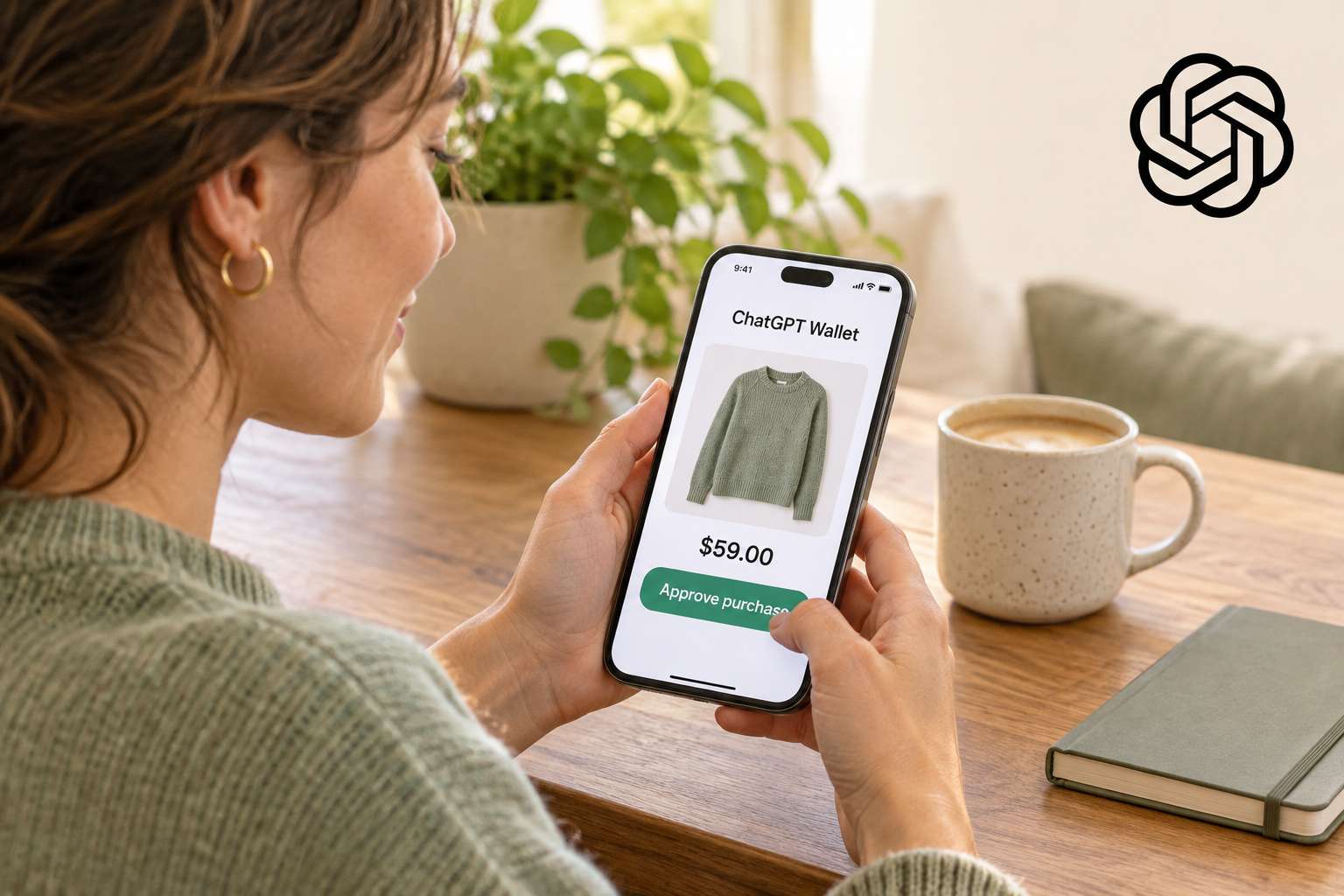
Initially rolling out to eligible ChatGPT Pro users in the US, ChatGPT Wallet allows users to save an eligible credit card, ask their AI agent to find products or services, and approve purchases through a security check. The feature has been developed in partnership with American Express, Mastercard, and Visa, allowing users to retain their existing card rewards and protections.
The development points towards a new phase of online commerce, where AI could increasingly become the interface between consumers and businesses.
When AI Moves from Recommendations to Transactions
AI-powered shopping tools have largely focused on helping consumers discover products, compare options, and make informed decisions. ChatGPT Wallet takes this experience a step further by allowing an AI agent to proceed with checkout after the user approves the purchase.
For instance, someone looking for a new sweater or planning a hotel stay can ask their dot to find suitable options. Once the user selects what they want, the agent can initiate the checkout process through Wallet.
The payment process also introduces an additional layer of security. Instead of accessing the user’s actual card details, the agent uses a payment token containing a transaction-specific card number, security code, and expiration date. Users must review the merchant, items, total amount, and other purchase conditions before approving the transaction through biometric verification, such as Face ID or Touch ID. (Source: OpenAI)
This distinction is important. While AI agents can take over several steps involved in shopping, the final payment approval remains with the consumer.
The shift could gradually change what consumers expect from digital shopping experiences. Instead of navigating multiple pages and payment screens, they may increasingly expect to describe what they need and let an AI agent handle the process.
Also Read: The AI Adoption Race: Are Businesses Overlooking the Bigger Picture? – TrustCircle
The New Opportunity for Online Businesses
For merchants, the development brings both an opportunity and a new set of considerations.
If consumers begin relying on AI agents to find and purchase products, businesses may need to rethink how their websites support these interactions. A website designed primarily for human visitors may not automatically offer the information and infrastructure an AI agent needs to complete a transaction.
OpenAI has acknowledged this challenge by publishing tools and guidance to help merchants prepare their websites for agent-led shopping. This includes helping businesses understand how their websites can allow AI agents to access the information required to assist consumers.
However, the transition is unlikely to be straightforward. Some businesses are already taking a cautious approach to AI agents accessing their platforms. United Airlines has said it will block agents from accessing its systems to book tickets, while Amazon has taken steps to prevent certain AI agents from making purchases on its marketplace.
These developments highlight an important question for the future of online commerce: how willing will businesses be to let AI agents interact with their platforms and complete transactions?
The answer will depend on factors such as security, control over customer relationships, transaction reliability, and the ability to maintain a consistent shopping experience.
Payment Security and Consumer Trust Will Shape Adoption
Allowing an AI agent to make purchases introduces a different kind of responsibility for technology platforms and payment providers.
Consumers need to know what they are buying, how much they are paying, and which merchant is receiving the payment. They also need confidence that their financial information remains protected throughout the process.
ChatGPT Wallet addresses part of this concern through tokenised payments, separate purchase approvals and biometric verification. Its partnerships with established payment networks also allow eligible users to retain existing card benefits and protections.
However, securing the payment process is only one part of building consumer confidence. Clear purchase information, reliable order confirmations, and transparent processes for handling refunds, cancellations, and recurring payments will remain equally important.
As AI agents take on more responsibilities, businesses and technology providers will need to establish clear boundaries around what these systems can do independently and where human approval is required.
Also Read: Character.AI: A Case Study on AI Innovation, User Trust and the Cost of Growth – TrustCircle
The Road Ahead for Agentic Commerce
OpenAI’s move also reflects a broader commercial ambition around AI-enabled shopping. Although the company is not initially taking a cut of transactions made through ChatGPT Wallet, the feature could eventually open up another revenue opportunity.
For now, the priority appears to be building relationships with merchants and payment networks while creating the infrastructure needed to support agent-led transactions.
The journey has not been without experimentation. OpenAI previously introduced Instant Checkout before shifting its focus towards a revamped shopping experience centred on product discovery and comparison. ChatGPT Wallet builds on those efforts by addressing another part of the shopping process: payment completion.
Yet, agentic commerce remains in its early stages. Its growth will depend not only on how capable AI agents become but also on whether merchants, payment providers and consumers are comfortable participating in this new ecosystem.
The larger change is that online shopping may no longer be defined solely by how easily consumers can navigate a website or complete a checkout. Increasingly, it could depend on how effectively businesses make their products, platforms, and payment systems accessible to AI agents.
For businesses, the next phase of digital commerce may involve preparing not just for customers who browse and buy, but also for AI agents that do the browsing and buying on their behalf.