


Every purchase tells a story about what consumers value, what they need, and what influences their choices. From the convenience of a product to the emotions associated with a brand, these decisions offer valuable insights into how people relate to the products they choose.
For brands, understanding these motivations can shape how they communicate with their audiences. The same product may appeal to different consumers for different reasons, making it important to understand not just who the audience is, but also what drives its purchasing decisions. This understanding helps businesses develop messages that reflect real consumer priorities and connect their offerings with the needs and expectations of their audiences.
Consumer behaviour, therefore, offers more than a way to understand purchasing patterns. It provides a strategic foundation for brand communication, helping businesses decide what to say, how to say it, and which aspects of their offering deserve the most attention.
Why Brand Positioning Must Begin with the Consumer
Brand communication extends beyond a company’s tone of voice or the language used in its advertisements. It encompasses how a brand presents its identity, values, and product benefits across packaging, advertising, social media, and other customer touchpoints. The challenge is to ensure that this communication reflects what matters to consumers, rather than simply what the brand wants to say about itself.
Understanding consumer behaviour helps bridge that gap. Observing how people compare products, what catches their attention and what influences their final purchase can reveal which benefits deserve greater emphasis. It can also help brands identify occasions or needs they may have overlooked.
These insights become particularly valuable when a product does not fit neatly into an established category or when a brand needs to distinguish itself in a crowded market. A practical example of this approach is Netri Dosa Khakhra, a snack brand based in Rajkot, Gujarat.
Netri Dosa Khakhra: Translating Consumer Insights into Positioning
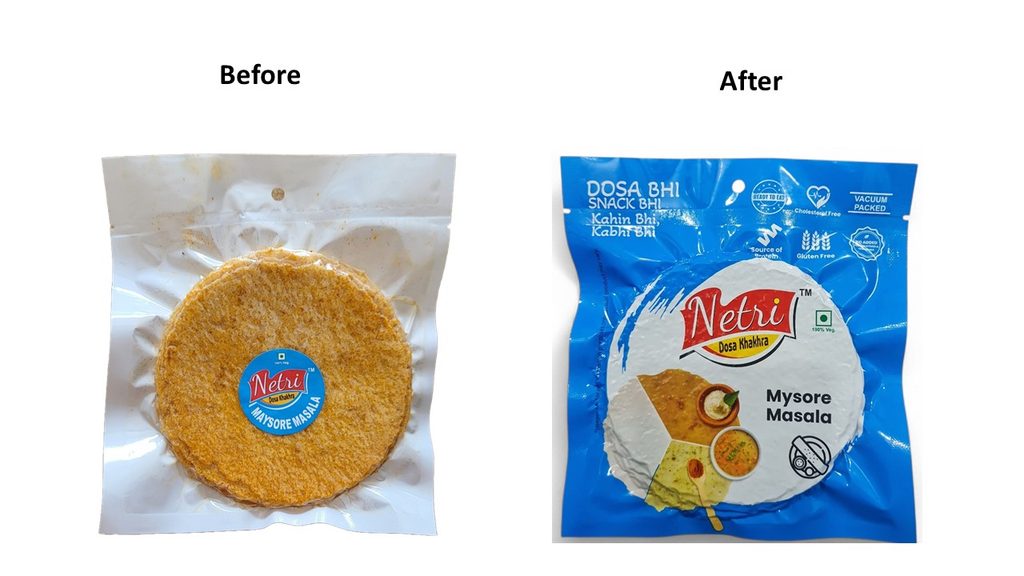
Netri Dosa Khakhra is a snack that combines the familiar characteristics of dosa and khakhra, offering a crispy, crunchy product positioned between the two. The brand wanted to redesign its packaging and develop a tagline that would communicate its offering more effectively.
To work on the brief, Brand Path Marketing Consultancy examined the product, its category, competitors, and target consumers. The process extended beyond desk research to observing buying behaviour in the local market.
According to the account shared by the consultancy, its team visited Rajkot to understand how consumers encountered the product at retail outlets. They observed shoppers browsing shelves, picking up packets, examining the packaging, and sometimes returning products to their original positions. They also spoke with distributors, retailers, and consumers to understand purchasing motivations and consumption habits.
The objective was to establish more than who bought the product. The research explored who influenced the purchase, who made the final decision, who used the product, and the circumstances in which it was consumed.
These distinctions matter because the person purchasing a product may not always be the person using it. Similarly, the reason someone chooses a snack for a household may differ from the reason they buy one for personal consumption. Understanding these contexts can help a brand identify which product benefits are most relevant to its audience.
For Netri Dosa Khakhra, the research informed a positioning direction that brought the product’s two defining characteristics together: its association with dosa and its suitability as a snack.
The resulting tagline was: “Dosa Bhi, Snack Bhi, Kahi Bhi, Kabhi Bhi!” (Source: Brand Path Marketing Consultancy)
Turning Consumer Insights into a Clear Brand Message
The tagline works by addressing two aspects of the product in a few words. “Dosa Bhi, Snack Bhi” communicates the product’s dual identity, while “Kahi Bhi, Kabhi Bhi” suggests flexibility in where and when it can be consumed.
Instead of relying on a lengthy description, the message gives consumers a quick way to understand the product’s intended place in their lives. It connects what the product is with how it might be used.
This illustrates an important principle of brand communication: the final message does not need to be complicated simply because the research behind it is extensive. In fact, the purpose of research is often to identify the most relevant idea and express it clearly.
Packaging plays a role in this process because it is frequently one of the first points of contact between a product and a shopper. At that moment, consumers may be comparing several options, scanning labels, or deciding whether an unfamiliar product is worth trying. Communication that makes the product’s purpose immediately understandable can help reduce that uncertainty.
However, clarity alone does not guarantee commercial success. A tagline must work alongside the product itself, its quality, availability, pricing, and other factors that influence purchase decisions.
What Marketers Can Learn from This
According to the account provided by Brand Path Marketing Consultancy, the packaging redesign and new tagline were followed by a substantial increase in Netri Dosa Khakhra’s sales, prompting the business owners to expand production capacity to meet demand. The account does not provide sales figures or a specific timeframe, so the scale of the increase and the contribution of the communication changes cannot be independently assessed. Nevertheless, the case illustrates how consumer research can inform a brand’s positioning and the way it presents a product to the market.
For marketers, the broader lesson is that brand communication should not begin and end with creative execution. Before deciding on a tagline, campaign, or packaging design, businesses need to understand the purchase context: what consumers are looking for, what influences their choices, and what questions they need answered.
That understanding can also help brands avoid communicating benefits that matter more internally than they do to customers. A message may accurately describe a product without giving consumers a compelling reason to consider it. Consumer behaviour provides a way to identify that difference. It shifts the focus from what a brand wants to communicate to what consumers need to understand.
Ultimately, effective brand communication is not simply about making a product sound appealing. It is about making its relevance clear to the people expected to buy it. The stronger the connection between consumer insight and brand messaging, the more meaningful the communication is likely to become.
Disclaimer: This article has been contributed by Jinesh P. Chauhan, Founder & Chief Marketing Strategist at Brand Path Marketing Consultancy
ssssmm