

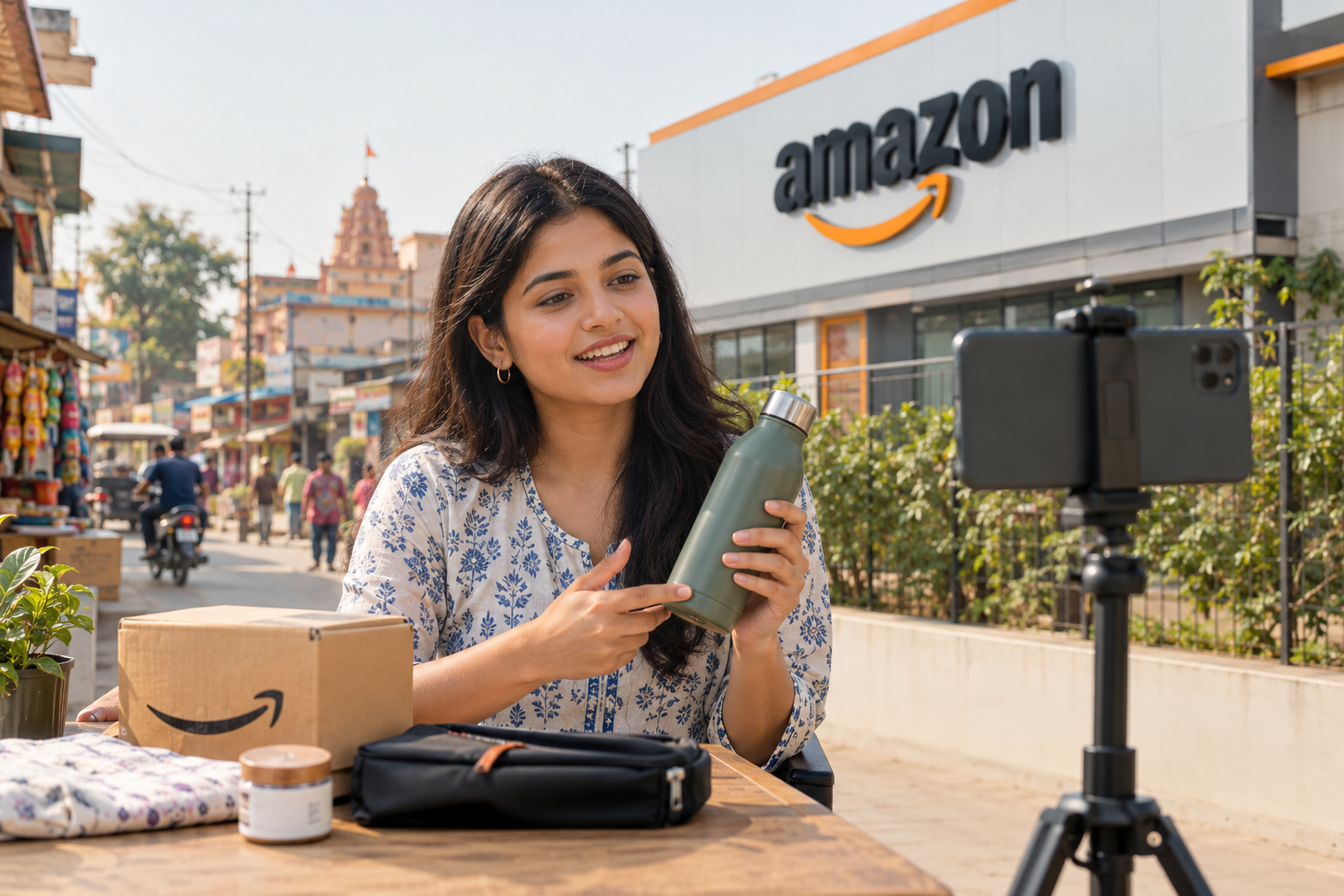
India’s creator economy is undergoing a significant shift. For years, influencer marketing largely revolved around creators from Mumbai, Delhi, Bengaluru, and other metropolitan centres. However, that picture is changing as smaller cities and towns emerge as important sources of digital influence. With nearly 75% of Amazon’s influencers in India coming from non-metro cities, the shift is no longer just an emerging trend; it reflects a wider transformation in how Indian consumers discover brands, evaluate products, and make purchasing decisions. (Source: exchange4media)
For brands, this development presents an opportunity to move beyond familiar urban audiences and connect with consumers through voices that understand their local markets, languages, and cultural preferences.
The Creator Economy Is No Longer a Metro-Only Business
The growing presence of non-metro creators is part of a much larger expansion of India’s digital ecosystem. Affordable smartphones, cheaper internet access, and the increasing popularity of regional-language content have made content creation more accessible to people beyond major cities.
According to a July 2026 report by the Indian School of Business (ISB) and HashFame, India’s creator base grew from 0.96 million in 2020 to 4.12 million in 2025. More significantly, non-metro creators accounted for 66% of the country’s total creator base in 2025, compared with 44% in 2020. (Source: prodcd.isb.edu)
This expansion indicates that the next wave of digital influence is not necessarily coming from creators with access to metropolitan networks or production resources. It is increasingly emerging from individuals who have built communities around everyday experiences, regional interests, and local conversations.
The significance for businesses is clear: the geography of influence is expanding, and brands that continue to concentrate their creator investments in major cities risk overlooking a substantial part of the market.
Why Smaller-City Creators Are Building Stronger Connections
The growing appeal of non-metro influencers is not simply about their location. It is about the relationship they establish with their audiences. A creator discussing skincare in a regional language, reviewing affordable fashion, or demonstrating a household product in a familiar local setting can make a brand feel more accessible to consumers. Their content often reflects purchasing considerations, lifestyles, and cultural references that larger, nationally focused campaigns may struggle to address.
This is particularly relevant in a diverse market like India, where consumer preferences can vary considerably across regions. A recommendation that resonates with an audience in Lucknow may require a different cultural context to connect with consumers in Coimbatore or Guwahati.
Creators such as Registani Ladkiyan, Baaghi Haryanvi, Nitya Kamble, Bablu Khan, and Gorraiya (Mansi Singh) illustrate this growing diversity. Emerging from smaller towns and regional communities, they bring local languages, cultural references and everyday experiences into their content, connecting with audiences through perspectives that are often missing from mainstream, metro-centric storytelling. Their presence also reflects the range of voices that brands can now engage with when looking beyond established influencer hubs. (Source: Livemint)
For brands, this creates an opportunity to make communication more relevant rather than simply increasing its reach. Smaller creators can help businesses build familiarity within specific communities, making product discovery feel more like a recommendation from someone consumers understand than a conventional advertisement.
Also Read: The New Geography of Influence: 8 Indian Creators Who Broke the Metro Myth
Regional Languages Are Becoming a Business Advantage
Language is emerging as another important driver of this transformation. While Hindi remains a major language in India’s creator ecosystem, regional languages collectively represent an even larger share. The ISB–HashFame report found that Hindi creators accounted for 42% of India’s creator base in 2025, while creators producing content in regional languages collectively represented 58%.(Source: exchange4media)
This matters because language influences more than the way a message is communicated. It shapes how consumers interpret product benefits, relate to a brand’s identity, and develop confidence in purchasing decisions. For example, a beauty brand explaining a skincare routine in Tamil or a financial services company simplifying digital payments through Marathi content can make complex product information easier to understand for its intended audience.
Consequently, regional content should not be treated as a translation exercise within a national campaign. Brands need to understand local conversations, cultural sensitivities, and consumer priorities before deciding how to communicate.
From Visibility to Commerce: The New Role of Influencers
Another important development is the growing connection between influencer content and actual shopping behaviour. Creators are no longer limited to generating awareness or improving social media engagement. They are increasingly becoming part of the consumer’s purchase journey.
Beyond expanding brand visibility, creators are increasingly influencing how consumers discover and purchase products online. Amazon’s October 2026 announcement highlights this growing role. Its Influencer Program has expanded to more than two lakh creators, doubling in size year-on-year. According to the company, these creators have helped nearly four crore customers shop for hundreds of millions of products on Amazon.in. This indicates how influencer-led content is evolving from a brand awareness tool into an important part of the digital commerce journey.
The development highlights how creator-led recommendations can connect product discovery directly with commerce. Through product reviews, demonstrations, affiliate links and personalised storefronts, creators can influence consumers at multiple stages of the buying journey.
For brands, this changes how influencer marketing should be evaluated. The value of a creator partnership cannot be measured only through views, likes, or follower counts. Product consideration, qualified traffic, conversions, and repeat purchases are equally important indicators of its effectiveness.
The Opportunity Comes With a Measurement Challenge
Despite the expansion, the non-metro creator economy still faces a gap between participation and sustainable earnings.
The ISB–HashFame report found that although the number of non-metro creators participating in brand campaigns increased from around 38,000 in 2020 to more than 4.08 lakh in 2025, most creators continued to secure only one paid brand campaign annually. (Source: isb.edu)
For businesses, this highlights an important distinction: discovering regional creators is only the first step. Building meaningful and consistent partnerships is what can make the investment valuable over time.
Brands need to move beyond selecting influencers based solely on follower numbers. Audience relevance, engagement quality, credibility, content consistency, and alignment with the brand’s objectives should play a greater role in selection.
They must also develop measurement frameworks that account for regional performance instead of applying the same benchmarks across every market.
The Next Chapter of Influencer Marketing Will Be More Distributed
The expansion of non-metro creators signals a broader change in India’s marketing landscape. Influence is becoming more distributed across cities, languages, and communities, creating opportunities for brands to build relationships with audiences that were previously difficult to reach through conventional influencer strategies.
However, the real opportunity is not simply to work with more creators from smaller cities. It is to understand the consumers and communities they represent.
As competition for consumer attention increases, brands that combine national brand-building with locally relevant creator partnerships will be better positioned to develop meaningful connections. The future of influencer marketing in India may not belong exclusively to the biggest creators or the most visible cities. It may belong to the voices that understand their audiences best.