

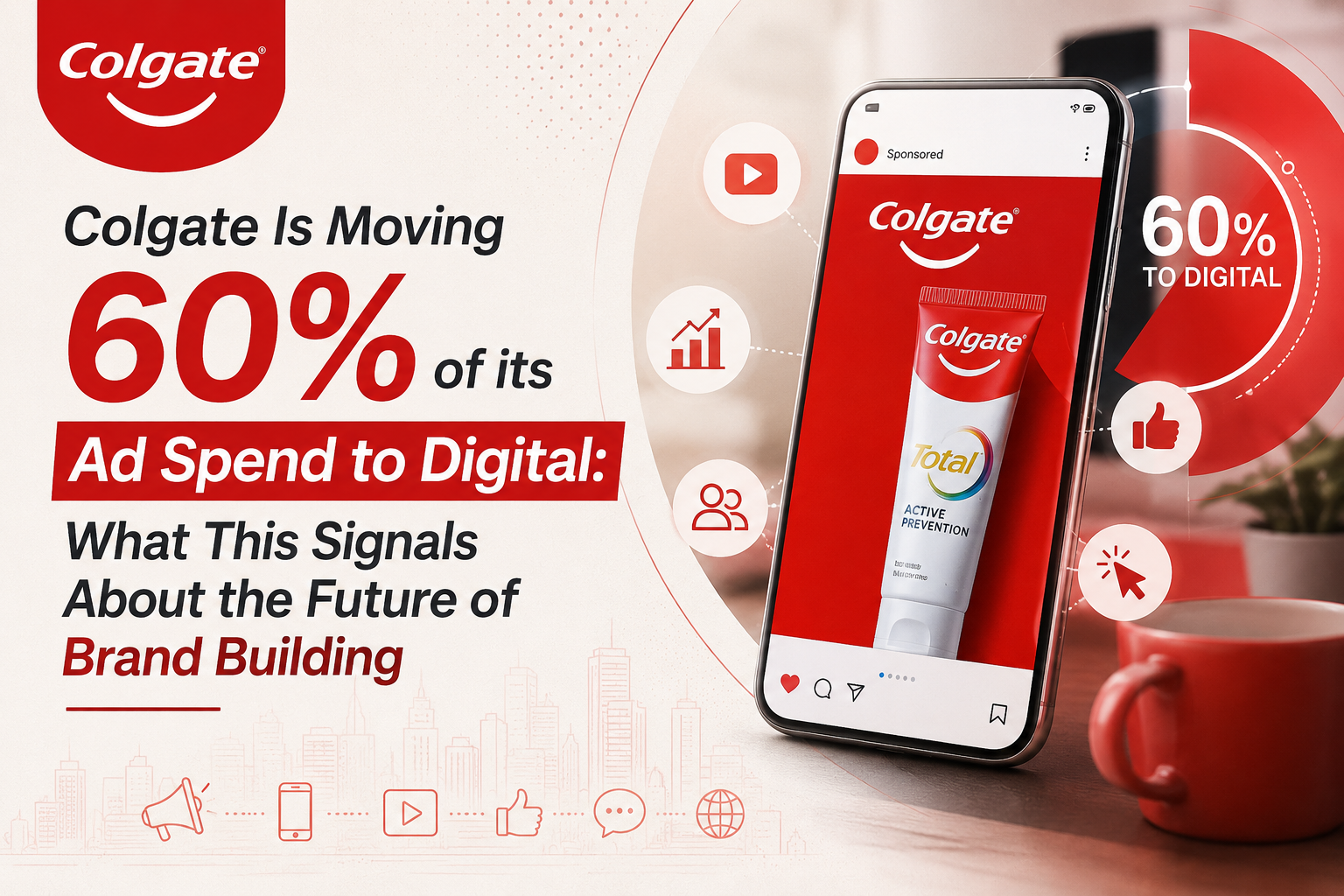
For decades, television was the engine behind FMCG brand building: reach millions, build familiarity, and stay top of mind. Now, one of India’s biggest FMCG names is rewriting that playbook. Colgate-Palmolive India is putting around 60% of its advertising spend into digital—a shift that says less about where Colgate is buying media and more about where mass-market brands believe consumer attention is heading.(Source: media4exchange)
The company is simultaneously increasing brand investments across its core portfolio and newer oral-care categories, while retaining television for broad-based reach. But digital is increasingly being used to reach sharper consumer segments, address specific needs and build engagement around the brand.
The bigger signal for marketers is clear: digital is no longer simply a performance channel designed to generate the next click or conversion. It is becoming a core engine for building attention, relevance and long-term brand preference.
The Media Mix Is Following the Consumer
For years, television gave FMCG brands the scale needed to build mass awareness. But Colgate’s latest media strategy reflects a more fragmented audience. Consumers at the lower end of the income pyramid increasingly have access to smartphones, while affluent consumers are increasingly moving towards non-advertised sources of content.
Television still retains relevance among the middle of the pyramid, which is why Colgate continues to use it for its core brands. The result is not a rejection of TV, but a more segmented media strategy built around where different consumers actually spend their attention.(Source: storyboard18)
But consumer attention is now fragmented across short-form video, streaming platforms, social media, creators, search and commerce platforms. Colgate’s decision reflects that reality. The company says its digital investment is being driven by the growing importance of online video, social platforms, creators and other digital touchpoints.
This does not make television irrelevant. Instead, it changes its role within a broader system. TV can still establish scale, while digital can extend the message into more specific moments, audiences and consumer needs.
Digital Has Outgrown the Performance-Only Label
The old distinction was relatively simple: television built the brand; digital generated the sale.
That separation is becoming harder to defend.
A digital campaign can introduce a product, educate consumers, demonstrate efficacy, build cultural relevance and create communities before a purchase ever happens. For a company expanding beyond conventional toothpaste and toothbrushes into premium and specialised oral-care products, that flexibility becomes particularly valuable. Colgate is looking to drive adoption of products including premium toothpastes, electric toothbrushes, mouthwashes and other specialised solutions.
The implication is significant. Digital should not automatically be evaluated through clicks, conversions or ROAS alone. Its contribution can also lie in awareness, consideration, search behaviour, engagement and the gradual strengthening of brand preference.
The real opportunity is therefore not choosing between brand and performance, but designing digital activity that can contribute to both.
What Traditional FMCG Brands Can Learn
Colgate’s strategy shows why established FMCG brands need to treat digital as more than another media channel. Its real advantage lies in the ability to adapt communication to different audiences, platforms and consumer moments.
A single brand idea can be shaped differently for someone actively searching for a solution and someone discovering it through a creator, allowing brands to move from broad storytelling to more relevant, need-based communication.
Digital also shortens the feedback loop. Marketers can see what audiences respond to, identify emerging conversations and refine their approach without waiting for an entire campaign cycle. For large brands, this turns digital from a media-buying platform into a continuous system for learning, adapting and strengthening consumer relevance.
The Real Question: Where Should the Next ₹100 Go?
The more useful question for marketers is not whether digital deserves 50%, 60% or any other fixed share of the budget.
It is: what job does each rupee need to perform?
Should the next ₹100 maximise reach or deepen relevance? Acquire new consumers or retain existing ones? Generate immediate sales or strengthen future preference?
These decisions cannot be solved by a universal media split. A brand entering a new category may need awareness first. A mature product competing in a crowded market may need stronger differentiation. Another brand may need performance investment because its distribution and conversion infrastructure is already strong.
The media mix should therefore follow consumer behaviour and the strategic objective—not industry fashion.
Smaller Brands Should Copy the Thinking, Not the Percentage
For smaller brands, Colgate’s 60% figure is not a benchmark to imitate. The more valuable lesson is the logic behind it.
Brands should identify where consumers spend attention and build their media mix accordingly. Colgate’s approach also shows how digital can communicate around specific consumer problems and product benefits, rather than simply extend traditional advertising. For smaller brands, the lesson is to use digital to build relevance around specific needs and strengthen why consumers choose them.(Source: media4exchange)
Most importantly, digital should reinforce the things that make a brand recognisable: its distinctive visual identity, language, product cues, expertise and point of view. Performance can deliver today’s customer; distinctive brand assets can help make tomorrow’s customer choose you faster.
Colgate’s move is therefore not evidence that traditional advertising is dying. It is evidence that the definition of brand building is expanding.
The strongest brands will not be those that simply move the largest share of their budgets online. They will be the ones that combine mass reach with digital relevance, use performance data without becoming performance-only brands, and measure marketing across both immediate returns and the long-term equity that makes future growth easier.