

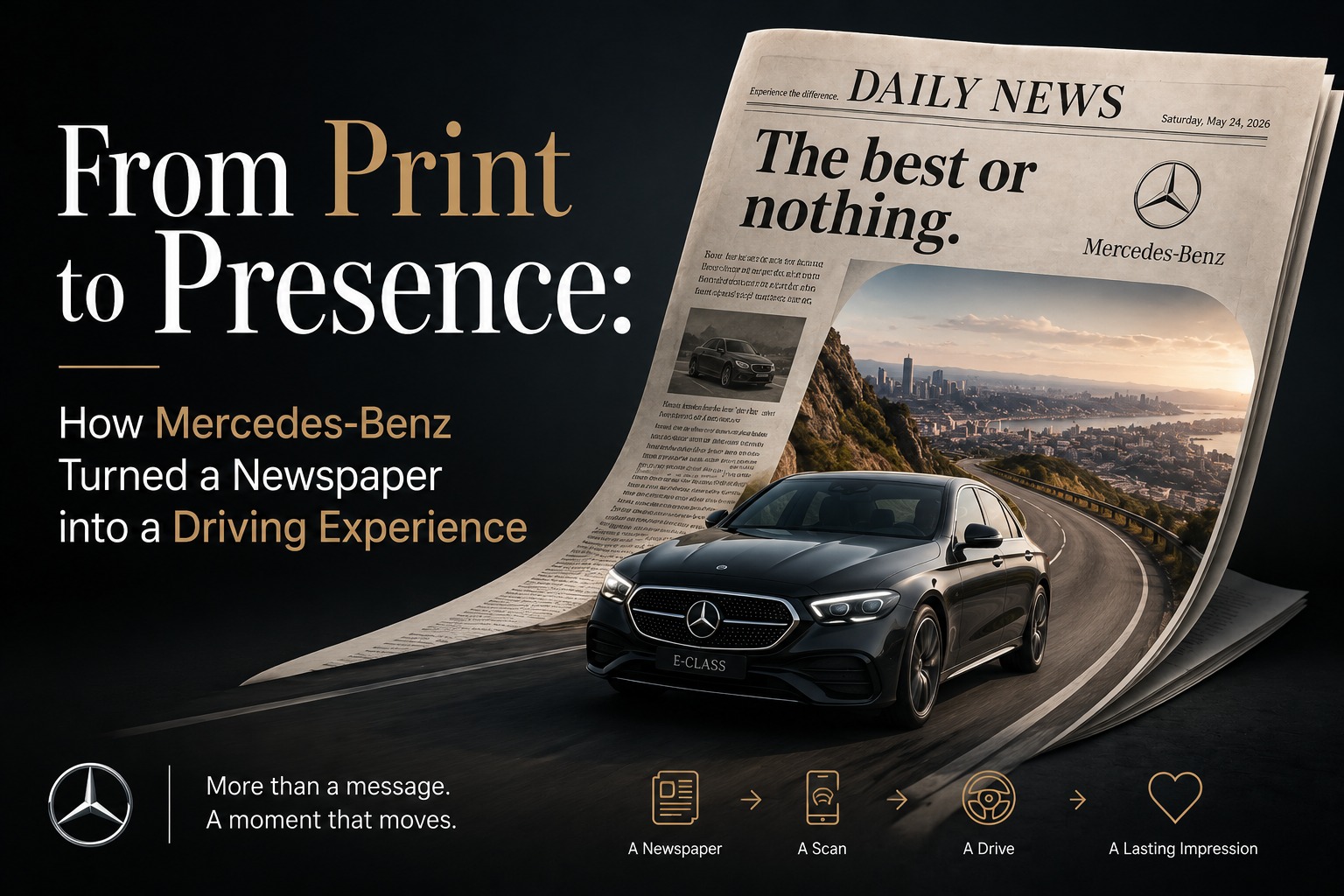
In a world where attention spans are shrinking and digital noise is deafening, it’s ironic that one of the most immersive brand experiences comes not from a screen but from a newspaper.
The recent print innovation by Mercedes-Benz flips the script on traditional advertising, reminding us that creativity is not dependent on technology, but on insight. Instead of asking audiences to imagine luxury, it places them right in the driver’s seat, quite literally transforming a routine moment of reading into something unexpectedly experiential.
It captures attention not by shouting louder, but by engaging deeper, proving that even in an age dominated by digital, tactile and physical experiences can leave a far stronger impression.
This isn’t just a clever print ad. It’s a statement about where marketing is headed, away from interruption-led communication and towards immersive, human-centric storytelling that people don’t just see, but genuinely feel and remember.
When Advertising Stops Asking and Starts Letting You Feel
For decades, advertising has relied on persuasion, telling consumers why a product is desirable. But this campaign does something radically different. It eliminates the need for imagination.
Mercedes-Benz India has launched its festive campaign Dream Days, created by Team X, part of BBDO India, anchored on the theme A Dream is Never Too Far Away. To bring this alive, the brand created an innovative front-page print ad in The Times of India, placing the iconic Mercedes-Benz steering wheel directly in the hands of readers.(Source: afaqs)
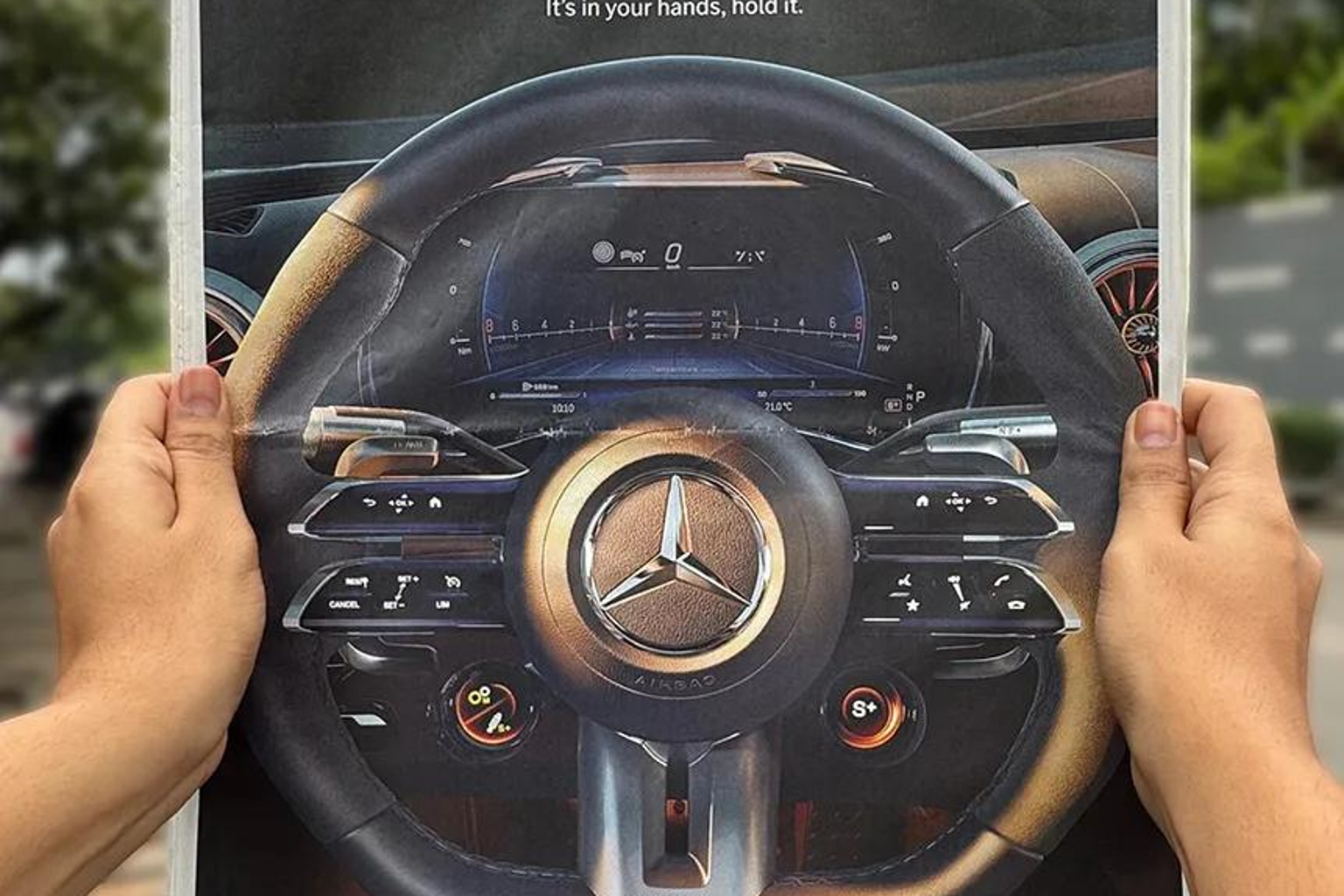
By aligning the steering wheel of a Mercedes-Benz car perfectly with the fold of a newspaper specifically The Times of India the ad transforms a passive reading moment into an active sensory experience.
As readers hold the paper, their hands naturally align with the steering wheel printed on the page, creating the illusion of driving.
It’s not just seen. It’s felt.
From Passive Viewing to Participatory Experiences
Modern consumers are no longer passive recipients of brand messaging. They scroll past ads, skip videos, and block interruptions. What they engage with instead are experiences moments that feel personal, interactive, and shareable.
This shift is crucial. People don’t remember ads; they remember how brands make them feel.
Mercedes-Benz India, in collaboration with Team X, part of BBDO India, launched its festive campaign “Dream Days,” anchored on the insight that “a dream is never too far away,” positioning the brand as a symbol of ambition and aspiration through an immersive front-page print execution. (Source: adobomagazine)
The Mercedes-Benz print execution taps into this behavioral change with precision. It doesn’t interrupt the reader’s experience; it becomes part of it. There’s no call-to-action screaming for attention, no overload of features or specifications. Instead, it quietly invites participation.
And in doing so, it earns attention rather than demanding it.
Engineering Emotion Through Simplicity
At first glance, the ad appears deceptively simple: a high-quality image of a car’s interior printed across a broadsheet. But the genius lies in its design thinking.
The placement of the steering wheel is not accidental. It is engineered to align perfectly with how a reader naturally holds a newspaper. The tactile engagement hands gripping the edges mirrors the act of driving. The dashboard visuals further enhance the illusion, transporting the reader into the cockpit of a luxury vehicle.
There are no exaggerated claims. No loud messaging.
Just one line: “A dream is never too far away. It’s in your hands, hold it.”
This is storytelling at its most minimal and most powerful.
Experience is the New Creative Currency
What this campaign underscores is a larger industry truth: creativity is no longer about what you say, but how you make people feel.
Products can be replicated. Prices can be undercut. Even digital strategies can be reverse-engineered. But experiences, especially those rooted in human behavior, are far harder to copy.
This is where cultural and contextual intelligence becomes a competitive advantage. By choosing print,t a medium often considered outdated,d the brand also makes a subtle statement. Innovation is not tied to technology; it’s tied to thinking. While most brands chase digital impressions, this campaign proves that physical media, when used creatively, can deliver deeper impact.
It’s not about the channel. It’s about the experience within the channel.
Designing for Real Moments, Not Just Media Plans
This campaign highlights that effective marketing today goes far beyond digital screens, reminding us that innovation can emerge from the most unexpected mediums when used thoughtfully. By deeply understanding consumer behavior something as simple as how people hold a newspaper brands can unlock powerful, experience-led ideas that feel natural rather than forced.
In a world overwhelmed by constant information, the execution also reinforces the power of simplicity, proving that a single, well-crafted idea can create far more impact than multiple cluttered messages. More importantly, it demonstrates that the most successful campaigns are those that invite participation instead of interrupting the audience, seamlessly blending into real-life moments rather than disrupting them.
Ultimately, it underlines a timeless truth for marketers, especially in the luxury space: people don’t just buy products; they buy emotions, and the brands that succeed are the ones that make their audience feel something memorable.
The Future of Branding Lies in What People Experience, Not What They See
The Mercedes-Benz print innovation is more than a creative execution; it’s a blueprint for the future of brand building.
As consumers become increasingly selective with their attention, brands must move beyond messaging and into experience design. The goal is no longer to be noticed, but to be felt. To create moments that linger beyond the medium in which they appear.
Because in the end, people may forget what an ad looked like, but they will always remember how it made them feel.
And in this case, for a brief moment, a simple newspaper didn’t just deliver news; it delivered the feeling of driving a dream.